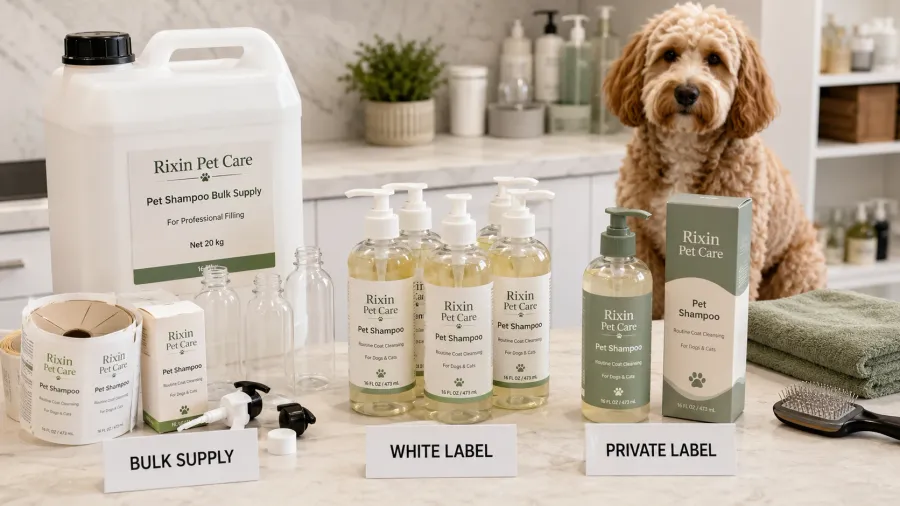
Private Label & OEM Guides

Ready-Made Formula vs Custom Formulation for Pet Grooming Products

RP Rixin Pet Care Editorial Team Published Updated 14 min read B2B Pet Care Insights

Written by: Rixin Pet Care Editorial Team

Reviewed by: Product Development Team for manufacturing context and claim-risk alignment.

This content is provided for product planning, packaging discussion and claim-risk awareness. It is not veterinary advice, treatment guidance or market authorization.
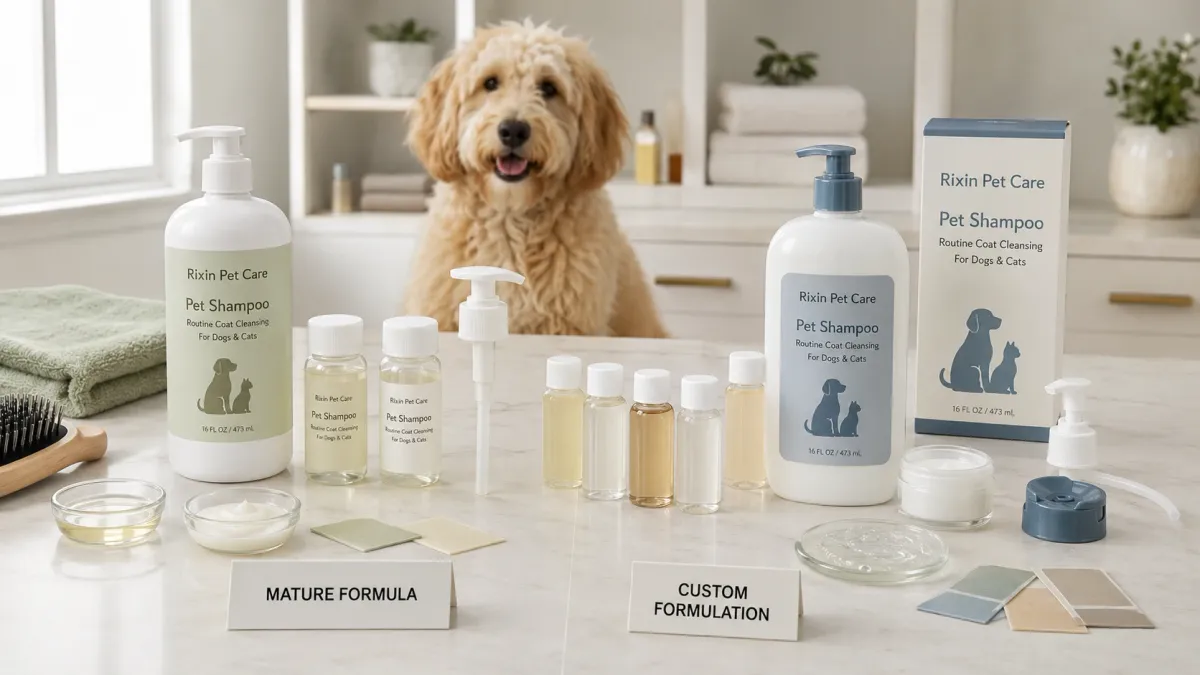
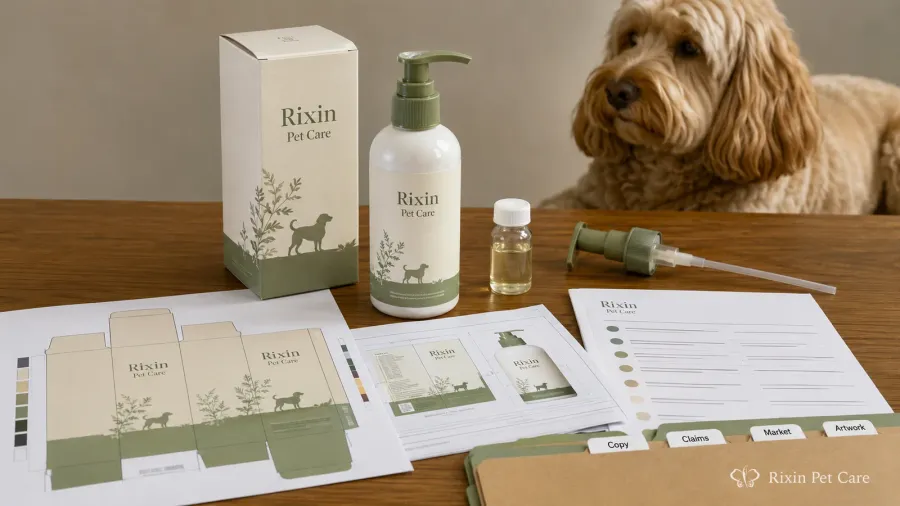
Mature and custom pet grooming formula routes compared through product development packaging

A brand may know it wants to launch a pet shampoo, grooming spray, wipes, or paw cleaner but still be unsure whether to start from a mature formula direction or request deeper development.

The ready-made vs custom pet grooming formula decision is rarely a choice between an unchanged stock product and a formula created from zero. Many projects sit between those extremes, with selected changes to fragrance, viscosity, appearance, foam, rinse feel, ingredients, or packaging.

A mature formula direction is not automatically generic. A custom pet grooming formula is not automatically exclusive or commercially stronger. The right route depends on what must be different, how clearly the brand can define that difference, and how much complexity the project can support.

For the wider framework, read the complete private label pet grooming products guide. To compare cooperation models, see private label vs white label vs OEM pet products.

Quick Answer

  • A mature formula direction starts from an existing product structure and may allow selected sensory, ingredient, and packaging adjustments.
  • Deeper custom formulation follows a detailed brief, benchmark, new format, or specification requiring broader technical changes.
  • Changing fragrance, color, or viscosity may count as selected customization rather than a fully custom formulation.
  • Any formula change may affect stability, preservation, packaging compatibility, samples, documents, cost, minimum quantities, or timing.
  • The best route is the one that controls the product characteristics that matter commercially-not the one that sounds more advanced.

A mature formula direction is a development starting point, not necessarily a finished product that cannot be changed.

Ready-Made Formula vs Custom Formulation: Quick Comparison

Comparison AreaMature Formula DirectionDeeper Custom Formulation
Starting pointExisting or previously developed formula directionDetailed buyer brief, benchmark, target specification, or new concept
Formula changesSelected adjustmentsBroader and more interconnected changes
Buyer input requiredModerateHigh
Sampling complexityUsually lowerUsually higher
Development timeUsually shorterUsually longer
Packaging reviewStill requiredOften more involved
Testing implicationsDepends on the changesMore likely to require broader confirmation
MOQ pressureOften lowerMay be higher
Differentiation potentialModerate to strong, depending on executionPotentially higher
Best suited forFaster launch and controlled customizationClearly defined product targets

These are common project patterns rather than universal rules. The actual formula, sample, testing, packaging, document, ownership, and production scope should be confirmed with the manufacturer in writing.

What Is a Mature Pet Grooming Formula Direction?

A mature pet grooming formula direction means the manufacturer is not beginning with a blank concept. The product category, formula structure, processing conditions, and major raw-material relationships already have a development foundation.

What a mature formula direction usually includes

It may offer an established structure, known processing route, existing sensory options, practical sampling path, and packaging formats considered for similar products. This reduces early variables but does not mean the final product is already confirmed for the buyer’s package, market, or wording.

What it does not automatically mean

It does not mean every buyer receives the same final product, only the label can change, the formula is exclusive, prior test information covers every modification, or any package will work.

For U.S. planning, the FDA describes products intended solely to cleanse or beautify animals as animal grooming aids, while intended use and public wording remain important. See the FDA’s Compliance Policy Guide on Animal Grooming Aids.

What Can Usually Be Adjusted in a Mature Formula Direction?

The feasible range depends on the formula. Some requests can be handled as selected adjustments; others affect several linked properties and require deeper development.

Sensory adjustments

Possible changes include fragrance, fragrance strength, viscosity, appearance, foam, spreadability, rinse feel, coat after-feel, and residue profile.

Even a sensory change can have technical consequences. More fragrance may affect clarity or stability. Higher viscosity may alter pump or sprayer output. A richer after-feel may create more coating than the target customer expects.

Selected ingredient direction

A mature formula may sometimes support fragrance removal, selected supporting ingredients, a botanical direction, stronger conditioning emphasis, odor-removal positioning, or a sensitive-routine direction.

A new ingredient may affect pH, solubility, preservation, viscosity, color, odor, sourcing, packaging interaction, and documentation. Its function and relationship with the full system matter more than its marketing popularity.

Product format adjustments

Rinse-off liquids, leave-on sprays, foaming formats, fine-mist products, wipes liquids, and concentrates have different technical needs. A format change may move the project beyond light customization.

Packaging and presentation

Formula is only one source of differentiation. Bottle shape, fill size, closure, label system, carton, fragrance family, bundles, and connected line presentation can create a distinct commercial offer.

What Requires Deeper Custom Formulation?

Deeper custom formulation is more appropriate when the desired result requires changes to the product’s technical structure rather than selected adjustments around an established base.

A new performance or sensory target

Examples include a defined foam structure, faster rinse, specific low-residue after-feel, coat slip, benchmark texture, spray pattern, wipe wetness, or dispensing behavior.

Major ingredient architecture changes

Changing the main cleansing, conditioning, emulsion, or preservation system-or adding several interacting materials-usually requires broader development. Removing a core material can be equally significant because its function must be replaced.

A new product format

Moving from liquid to foam, rinse-off to leave-on, bottle to wipes, standard spray to fine mist, or standard-use product to concentrate may require a different formula-package system.

Market-specific requirements

A strict fragrance-free brief, ingredient exclusion list, retailer standard, document requirement, packaging-material restriction, or need to match an existing product platform may increase development depth.

A buyer-owned formula or detailed specification

A buyer may provide a formula, target percentages, technical specification, performance data, or detailed benchmark. The manufacturer then needs to review feasibility, sourcing, processing, scale-up, documents, and packaging suitability.

Brands with these requirements can review pet grooming formula development support and OEM and custom pet grooming manufacturing.

Do You Need Formula Adjustment or Deeper Development?

Prepare the product type, target market, benchmark, essential sensory requirements, ingredients to include or avoid, packaging direction, and estimated quantity. A manufacturer can then explain which requests fit an established base and which require deeper development.

Do Fragrance, Viscosity, and Foam Changes Count as Custom Formulation?

Not necessarily. These changes can fall within selected formula customization or formula adaptation rather than fully custom development.

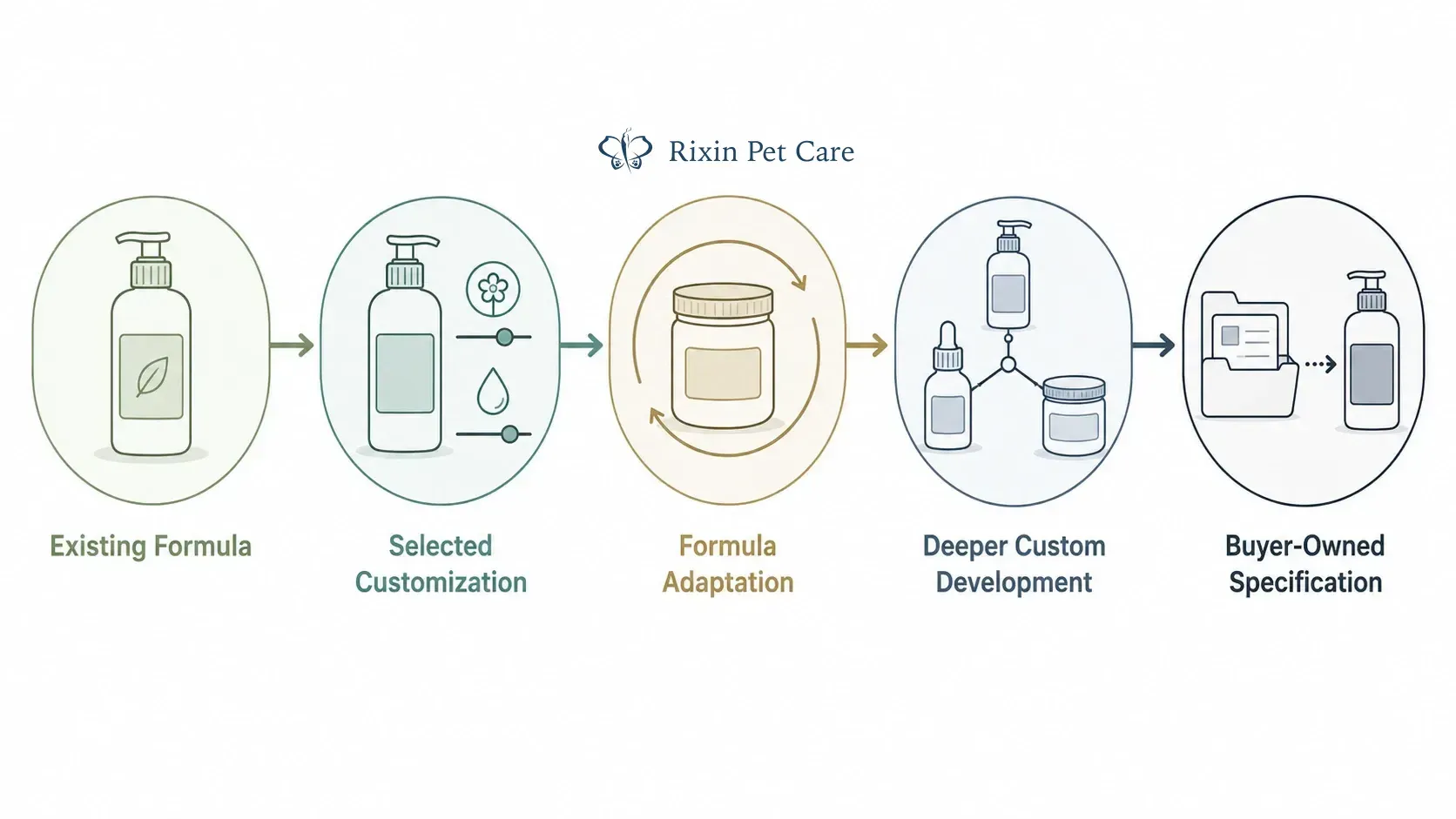
A useful way to view formula depth is as a spectrum:

Existing formula -> Selected customization -> Formula adaptation -> Deeper custom development -> Buyer-owned specification

The classification depends on what the change does to the formula and project-not simply whether something has changed.

Pet grooming formula development spectrum from existing formula to buyer-owned specification

A fragrance or viscosity adjustment becomes more involved when it:

  • Changes the base formula structure
  • Requires replacement of major materials
  • Affects preservation or solubility
  • Changes the product’s application method
  • Requires a different production process
  • Creates new packaging requirements
  • Requires broader stability or compatibility confirmation
  • Changes the ingredient list, specification, or public wording route

A manufacturer may call both projects “private label,” while another may describe the more involved version as OEM. The written development scope is more useful than the label.

How Can a Benchmark Sample Be Used?

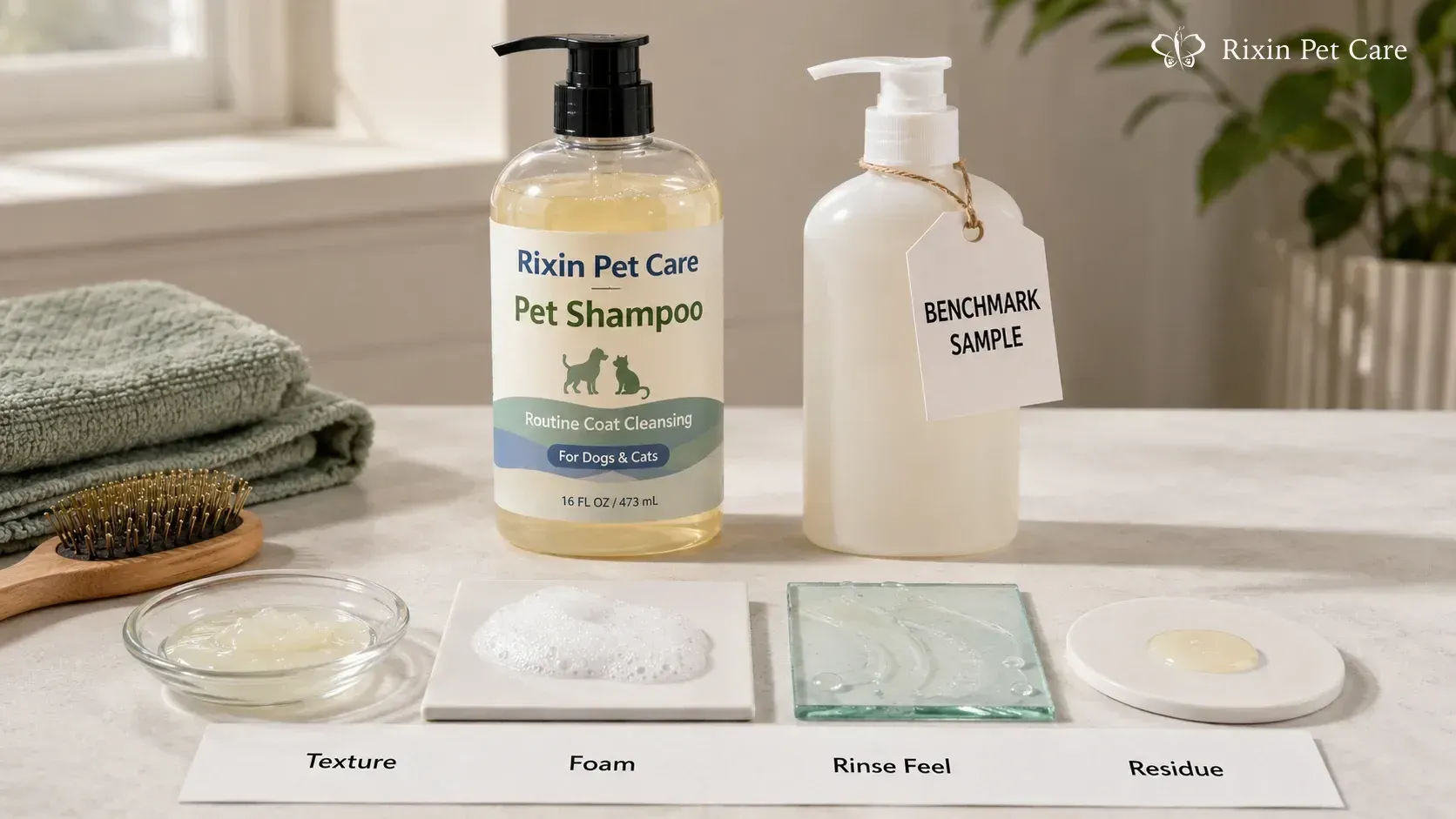
A pet product benchmark sample is most useful as a communication tool. It can help define texture, viscosity, foam, fragrance, rinse feel, residue, appearance, dispensing, and application.

What a benchmark cannot guarantee

A benchmark does not guarantee exact duplication. Its formula may contain confidential know-how, protected technology, unavailable materials, or a package that contributes to the experience.

WIPO notes that formulas and recipes may qualify as trade secrets when the relevant conditions are met. Benchmark-led development should therefore focus on a lawful target experience rather than reproducing undisclosed technical information. See WIPO’s frequently asked questions on trade secrets.

How to provide useful benchmark feedback

Do not stop at “I want something like this.” Explain what should remain similar, what should feel lighter or richer, the preferred fragrance direction, expected foam, desired rinse, acceptable residue, preferred dispenser, and what the new product must do differently.

Pet shampoo benchmark comparison focused on texture, foam, rinse feel, and dispensing

Advantages and Limitations of Each Formula Route

Mature formula direction

Advantages: faster path to sampling, fewer early variables, easier use for a first SKU, more controlled budgeting, and meaningful differentiation through selected formula and packaging choices.

Limitations: the base may be shared, some systems cannot be changed independently, a precise benchmark may not fit the structure, and prior information may not cover the final adjustment and package.

Deeper custom formulation

Advantages: greater control over product experience, stronger alignment with a detailed position, and more flexibility for specific formats, benchmarks, or long-term product platforms.

Limitations: more decisions, sample feedback, time, material constraints, and formula-package variables. It does not automatically include exclusivity, and an unclear brief can create repeated revisions without stronger commercial value.

How Formula Route Affects Sampling

Sampling should answer defined questions rather than produce a general “like” or “dislike” response.

Sampling a mature formula direction

The buyer may assess fragrance, viscosity, appearance, foam, rinse, after-feel, residue, dispensing, packaging fit, and brand suitability. Fewer technical variables may need to be solved at once, but the number of rounds still depends on the requested changes.

Sampling a custom formulation

Deeper development may establish the technical base, confirm sensory direction, refine key attributes, review package interaction, and then confirm the approved sample and specification.

How to provide actionable feedback

“Make it better” or “more premium” is difficult to use. Better feedback includes: reduce fragrance strength, increase viscosity slightly, produce less foam, rinse faster, reduce coating feel, improve spray distribution, or reduce dripping.

How Formula Changes Affect Packaging Compatibility

Packaging should not be finalized independently from the formula route. The package is part of product performance.

Important relationships include:

  • Viscosity and pump output
  • Formula clarity or particles and sprayer function
  • pH and packaging material
  • Fragrance system and bottle or closure interaction
  • Wipes liquid and substrate compatibility
  • Product thickness and filling accuracy
  • Foam formula and foaming-pump performance
  • Closure system and leakage resistance

A mature formula does not suit every package. A custom formula should not reach final approval before the intended packaging has been considered. A successful laboratory sample in a jar may behave differently after filling, dispensing, storage, and transport in the commercial package.

Pet shampoo, grooming spray, and foam cleanser matched with compatible packaging

How Formula Changes Affect Stability, Testing, and Documents

Any change should be assessed according to its function and risk. Prior information should not automatically be assumed to cover a modified version.

Stability

Changes may influence appearance, odor, viscosity, pH, separation, settling, dispensing, packaging interaction, and performance over time.

The FDA’s human-cosmetics guidance states that manufacturers are responsible for product safety and that there is no single FDA list of tests for every cosmetic. Pet grooming products have different market and intended-use considerations, but the development principle remains useful: select testing for the final product and foreseeable use. See Product Testing of Cosmetics.

Microbial and preservation considerations

A new raw material, water level, botanical input, package, or use pattern may change preservation risk. The FDA discusses contamination risks in water-containing personal-care products in Microbiological Safety and Cosmetics.

ISO 11930 describes a preservation efficacy reference method for cosmetic formulations, while ISO 29621 describes a risk-assessment approach for low-risk products. These may inform quality discussions but should not be presented as universally mandatory pet-product requirements without market-specific review.

Packaging compatibility

Review may include leakage, clogging, deformation, discoloration, label performance, dispensing consistency, seal integrity, and formula changes inside the package.

Product documents

A change may require updates to the ingredient list, specification, SDS where applicable, COA parameters, label copy, product description, test records, approved-sample reference, and market-facing claims.

The FTC states that objective express and implied advertising claims require a reasonable supporting basis. Final wording should therefore match the final formula and available evidence. See the FTC’s Advertising Substantiation Policy.

Should a New Brand Validate the Market or Build an Exclusive Formula First?

A mature formula direction is often practical when demand is unproven, the first-order budget is limited, or the team lacks a clear benchmark and consumer evidence.

Deeper development may be justified when the brand has established channels, direct feedback, a documented product gap, and enough time and budget.

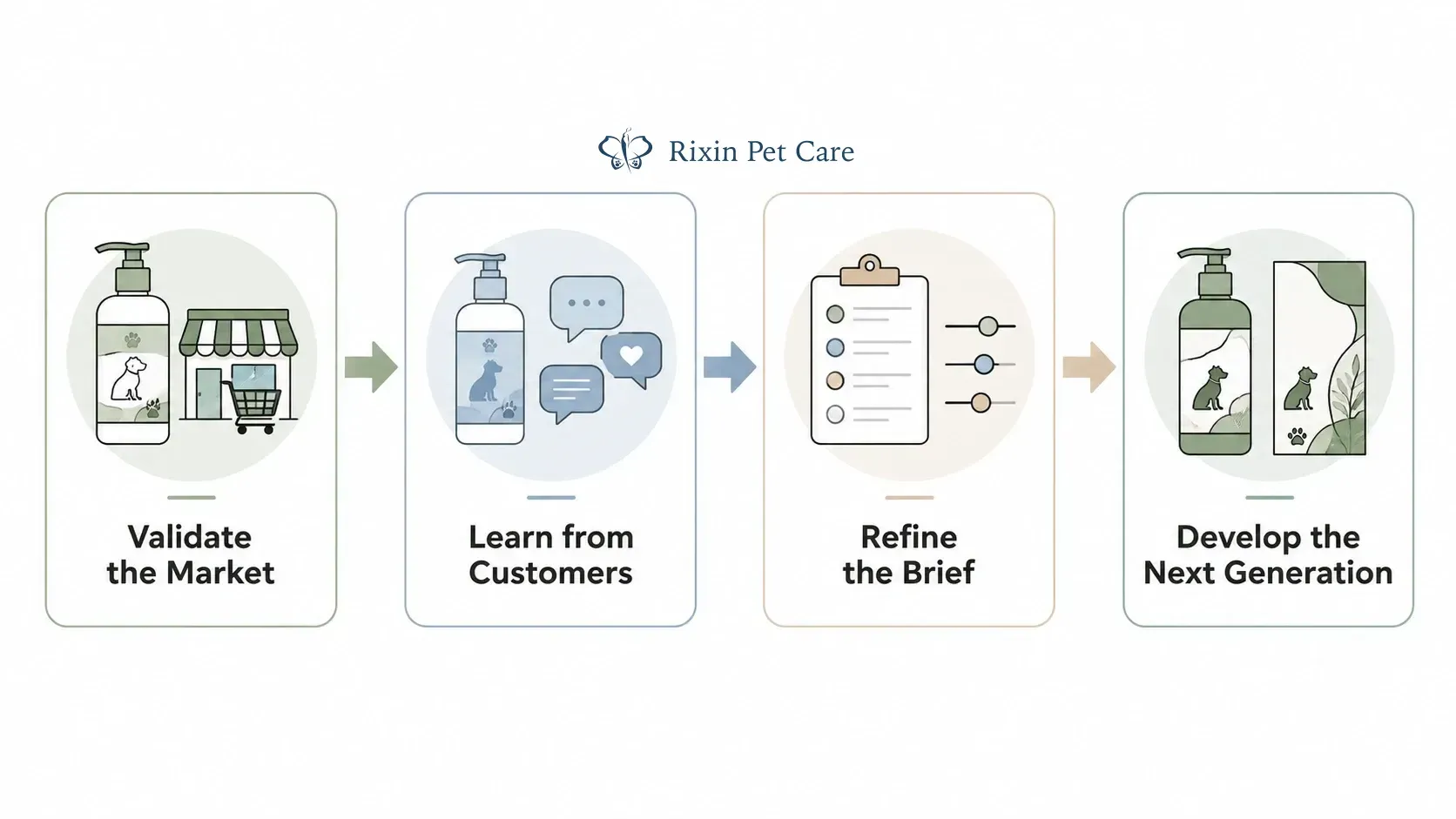
The routes can be phased. A brand may launch a controlled mature formula, learn from customers, and use that evidence to develop a more differentiated second generation. When formula experience is the brand’s central promise, deeper development from the first launch may be more appropriate.

Phased pet grooming formula route from market validation to second-generation development

Decision Scenarios

New Amazon seller testing pet shampoo

Likely direction: Mature formula direction. The seller needs to validate demand and control first-order complexity. A private label pet shampoo can help define the core formula and packaging questions.

DTC brand building a fragrance-free routine

Likely direction: Mature adaptation or deeper development. The answer depends on whether an existing system can meet the fragrance-free, low-residue, shampoo, wipes, and spray requirements.

Existing brand matching a benchmark

Likely direction: Deeper custom formulation or OEM. Foam, viscosity, rinse, after-feel, and packaging targets need to match an established brand experience.

Pet salon launching retail shampoo

Likely direction: Mature formula with selected packaging. Direct customer access can validate product role, size, scent, and repeat purchase.

Distributor developing a market-specific line

Possible direction: Private label, OEM, or ODM. The choice depends on whether the distributor has a complete brief, needs concept support, or requires market-specific adaptation.

Questions to Answer Before Choosing a Formula Route

  1. What part of the product experience must be different from existing options?
  2. Is the desired difference formula-based, packaging-based, or brand-based?
  3. Do you have a benchmark product?
  4. Which benchmark characteristics matter most?
  5. Do you need changes to fragrance, viscosity, foam, rinse feel, format, or ingredients?
  6. Is formula exclusivity commercially necessary?
  7. What would exclusivity need to cover: formula, market, channel, or time?
  8. What is the target first-order quantity?
  9. How many sample and decision rounds can the schedule support?
  10. Has the package format already been selected?
  11. Which documents or test support are required?
  12. Is this a market-validation launch or a long-term hero product?
  13. What budget is available for development beyond production?
  14. Which requirements are essential, and which are preferences?

Mature Formula or Custom Formulation: Decision Checklist

Choose a mature formula direction if:

  • Faster launch matters more than complete formula exclusivity
  • The brand is still validating the market
  • Most changes involve fragrance, appearance, viscosity, sensory profile, or packaging
  • An established product structure is acceptable
  • The project needs fewer development variables
  • First-order complexity must remain controlled

Choose deeper custom formulation if:

  • You have a detailed product brief or benchmark
  • The product experience is central to the brand difference
  • Major formula systems or product formats must change
  • The package and formula must meet a detailed target together
  • You can support additional samples, testing, and decisions
  • Channel or consumer evidence supports the investment

Consider a phased route if:

  • You want to validate demand before committing to deeper development
  • The first generation can use a controlled mature formula direction
  • The longer-term plan includes a more distinct second-generation formula
  • Real customer feedback can improve the future brief

Frequently Asked Questions

Is a ready-made pet grooming formula the same as white label?

Not exactly. White label describes a cooperation model; a mature formula direction describes the technical starting point. Private label can also begin with a mature formula and selected adjustments.

Can a ready-made pet grooming formula still be customized?

Often, yes. Fragrance, viscosity, appearance, foam, rinse feel, selected ingredients, and packaging may be adjustable, depending on the formula.

Does changing the fragrance create a custom formula?

Usually it is selected customization rather than a completely new formulation, but it may still require a new sample and review.

Does a custom formula have to be developed from zero?

No. It may begin with a benchmark, an established base requiring broader changes, a detailed brief, target specification, or buyer-owned formula.

Can a manufacturer copy my benchmark exactly?

A benchmark should define a target experience. Exact duplication cannot be assumed, and development should not rely on another company’s confidential formula or protected technology.

Does a custom formula automatically belong to my brand?

No. Ownership, usage rights, confidentiality, technical access, and exclusivity should be agreed in writing.

Will changing one ingredient affect stability testing?

It may. The effect depends on the ingredient’s function, level, formula structure, preservation, package, and intended market.

Should a new brand start with a custom formula?

It can be worthwhile with strong evidence and a clear target. For demand validation, a mature formula direction may reduce unnecessary complexity.

Start with the Product Requirements That Matter Most

The central question in ready-made vs custom pet grooming formula planning is not whether one route is ordinary and the other premium. It is how much product control the brand needs, what evidence supports that need, and whether the project can carry the development work.

You do not need a complete technical formula before contacting a manufacturer. Separate essential requirements from preferences, explain what the benchmark should communicate, identify packaging constraints, and state the commercial limits of the first launch.

If you have a product direction, target market, benchmark, sensory target, packaging idea, or quantity estimate, share those requirements for a practical formula-route review.

External References

Ready to Discuss Your Pet Grooming Product Project?

Share your product type, target market, packaging direction, estimated quantity, and any support you need. A rough brief is enough to start a practical next-step discussion.
Back to Blog

Related Posts

View All Posts »