Pet Grooming Formula–Packaging Compatibility Guide
Written by: Rixin Pet Care Editorial Team
Reviewed by: Product Development Team for manufacturing context and claim-risk alignment.
This content is provided for product planning, packaging discussion and claim-risk awareness. It is not veterinary advice, treatment guidance or market authorization.
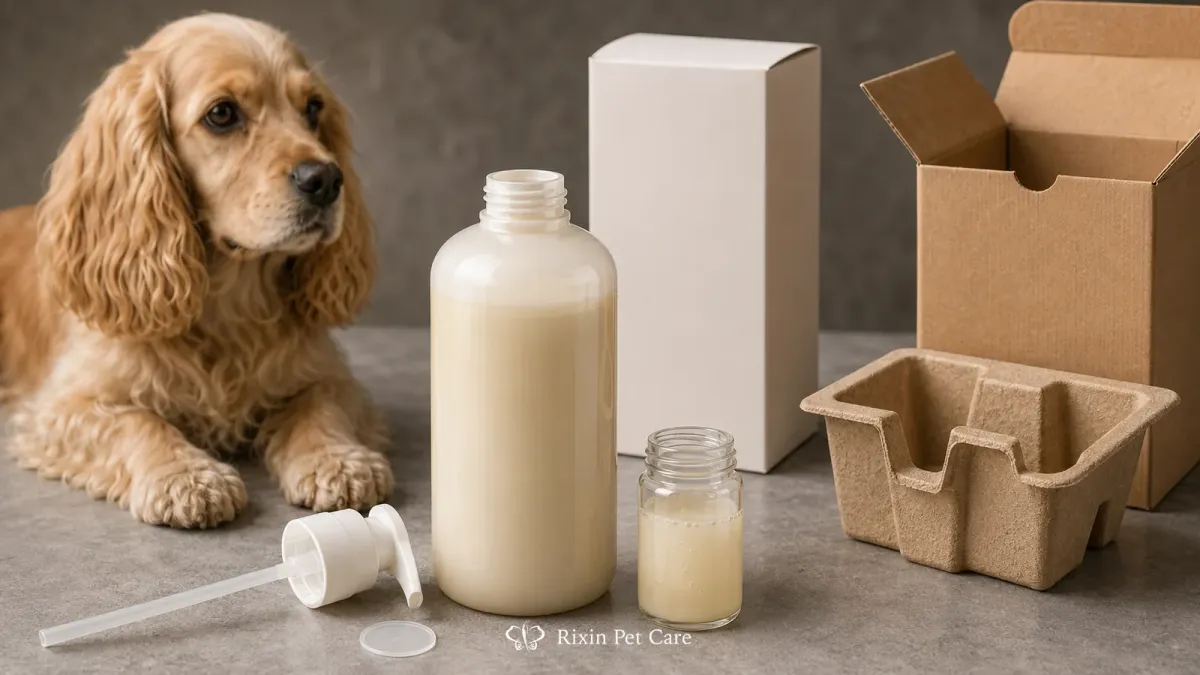
For private-label pet grooming buyers, a package can look suitable yet dispense poorly, leak during handling, or behave differently when the formula, closure, fill level, or shipping position changes.
Packaging selection chooses a direction. Formula–packaging review asks whether the selected formula and production-intent package—the packaging version planned for bulk manufacture—can work together under the conditions that matter to the project.
Start with the private label pet grooming packaging guide if you have not yet chosen a container and dispensing direction. For the wider project path, use the complete private label pet grooming products guide.
This content is for product planning, packaging discussion, and claim-risk awareness only. It is not veterinary advice, medical guidance, or market authorization. It does not confirm compatibility, product safety, transport performance, stability, or final package approval.
Quick Answer
Review the formula and package in this order:
- Confirm the intended formula and production-intent package—the version planned for bulk manufacture.
- Review dispensing behavior.
- Review the closure, seal, and leakage questions.
- Review the container and contact-component materials.
- Confirm fill volume and headspace.
- Consider storage, handling, and transport conditions.
- Compare the sample package with the intended production system.
- Review again when a material project variable changes.
The appropriate review scope depends on the formula, packaging system, market, channel, shipping route, and project risk. A stock bottle, familiar pump, or successful small sample does not remove the need for project-specific confirmation.
Why Appearance Is Not Enough
Visual fit does not prove operational fit.
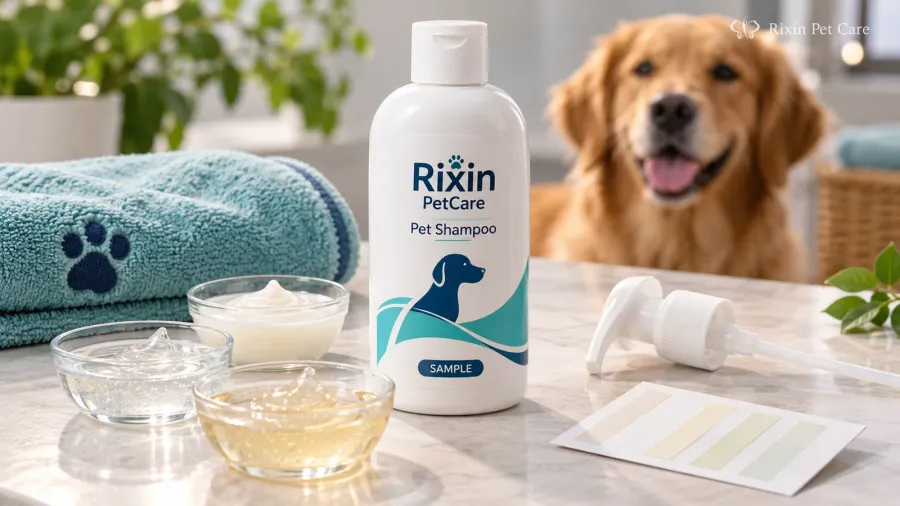
A thick shampoo may move slowly through the selected pump. A grooming spray may produce an unsuitable output or leave residue around the actuator. A closure that appears secure while upright may behave differently when a parcel is stored sideways.
These examples do not prove failure. They show why the formula, package, and intended conditions should be considered together before bulk production.
For example, a thicker shampoo in a lotion-pump bottle for ecommerce delivery may require review of dispensing, closure cleanliness, sideways exposure, and shipping protection before production.
Review the Formula and Package as One System
The system includes more than the bottle:
- formula;
- container;
- closure or dispensing component;
- dip tube;
- liner, seal, or gasket;
- fill volume;
- headspace;
- label or decoration where relevant;
- inner protection;
- storage and shipping conditions.
Changing one part may affect another. A different viscosity may change pump performance. A new closure may use a different liner. A different fill level may affect product contact around the neck or closure.
The selected formula route also matters. An established direction with limited adjustment may create different review questions from deeper custom work. The ready-made versus custom formula guide explains that decision separately.
Check Dispensing Performance
Dispensing should be reviewed with the intended formula rather than an unrelated liquid.
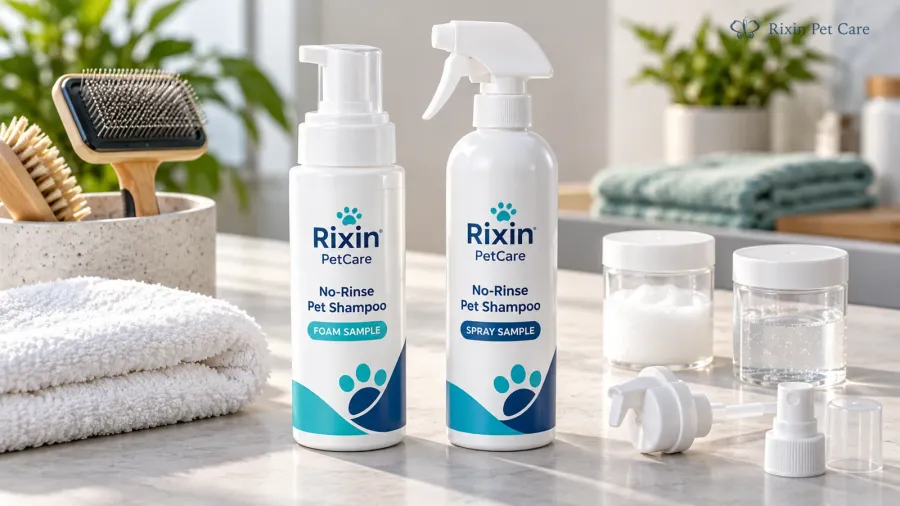
For pumps, consider whether the product can move through the dip tube and mechanism at the intended output. For trigger or fine-mist sprayers, review spray pattern, droplet size, residue, clogging risk, and whether the actuator continues to work after repeated use. For foamers, review the formula and pump together to confirm the intended foam behavior.
For a buyer-focused review of a no-rinse sample’s dispensing and finished-coat behavior, see how to evaluate a no-rinse pet shampoo sample.
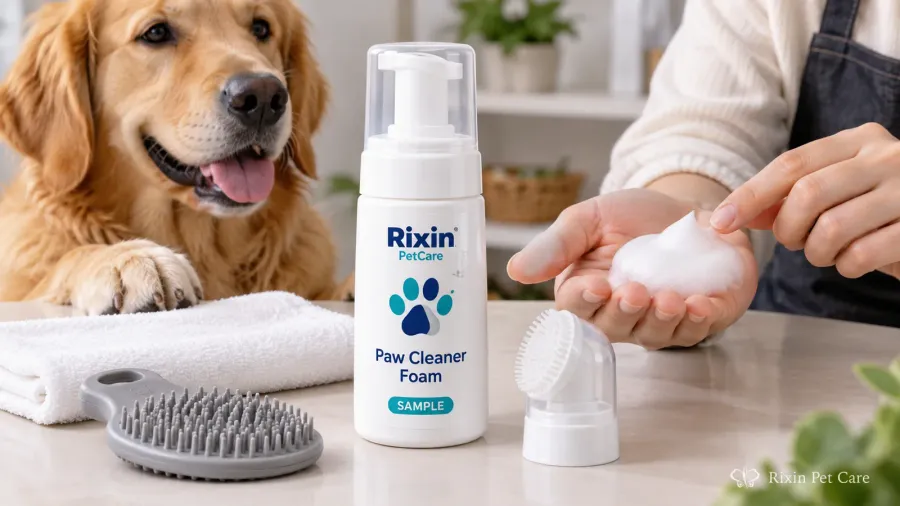
For a product-specific review of a paw cleaner foam sample’s foamer output and package behavior, see how to evaluate a paw cleaner foam sample.
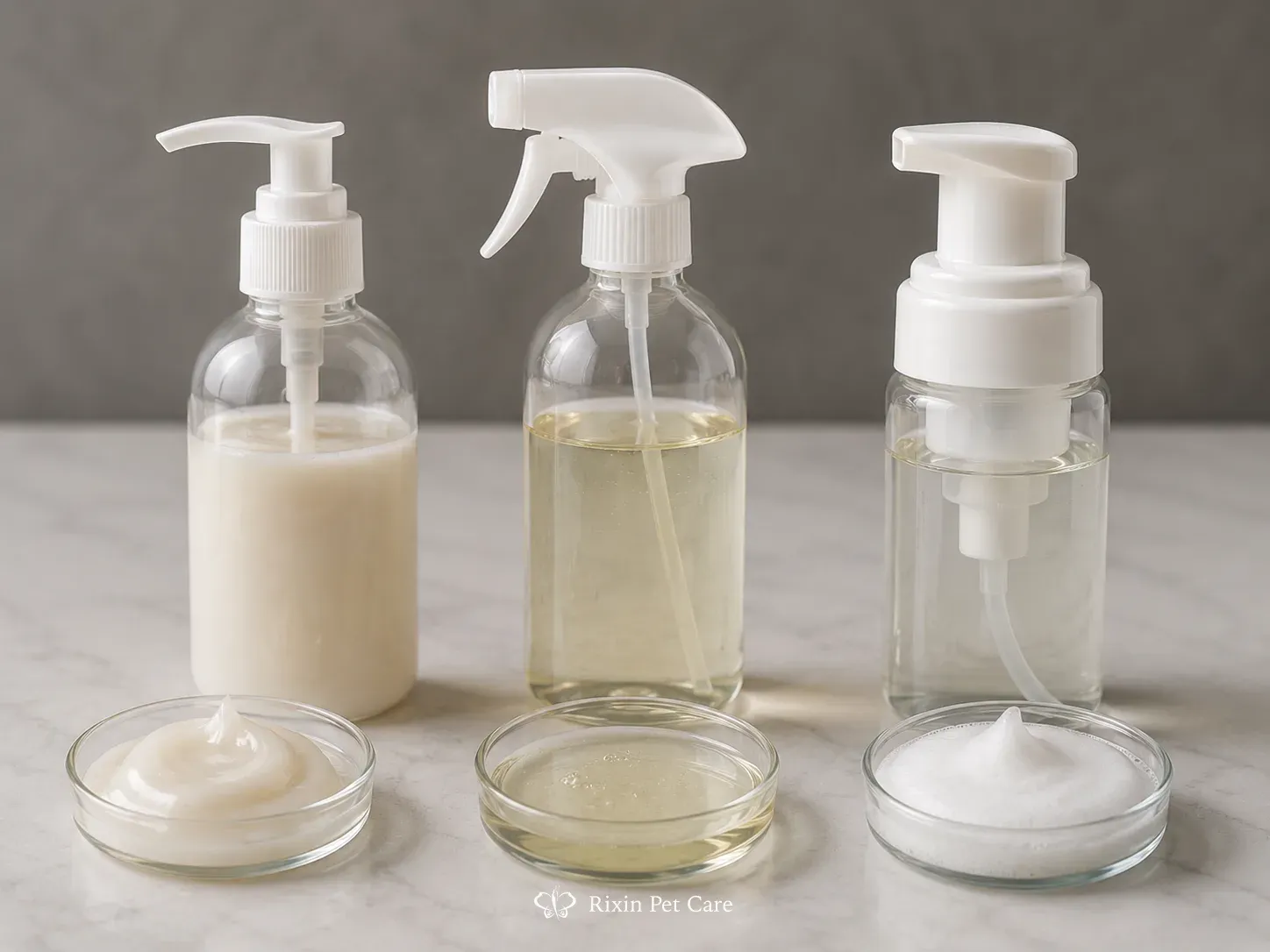
Also consider:
- dripping after dispensing;
- product collecting around the nozzle or closure;
- priming behavior;
- wet-hand use;
- repeated professional use;
- whether the container can be held and operated comfortably.
Do not assume that a closure used for one formula will behave the same with another. Small differences in flow, solids, oils, fragrance systems, or product structure may affect operation.
Check Closure, Seal, and Leakage Questions
A package should be reviewed as an assembled unit.
Confirm that the neck finish, thread, closure, liner, seal, pump, or sprayer belong to the same intended matched component system. Ask how the closure is assembled, tightened, locked, and protected during packing.
Relevant questions include:
- Is a liner or seal required?
- Can the pump or trigger be locked for shipping?
- Is the unit expected to remain upright?
- Could product collect around the neck or seal?
- How will the package be protected inside the shipping carton?
- Will ecommerce parcels expose the unit to sideways storage or repeated movement?
Avoid describing a package as “leak-proof” unless evidence supports the exact finished system under defined conditions.
Check Material Interaction
The formula may contact several materials:
- bottle or pouch;
- closure plastic;
- dip tube;
- liner;
- seal;
- gasket;
- internal coating where applicable.
The review may consider whether the package or product shows changes in appearance, odor, flexibility, swelling, brittleness, sealing behavior, or dispensing function.
Material names alone are not enough to make a universal conclusion. PET, HDPE, glass, aluminum, and flexible packaging each include different constructions, grades, closures, and production conditions. The exact formula and component specifications should guide the review.
Decorated or printed surfaces may also need attention when the formula, cleaning, abrasion, or handling could affect their appearance or function.
Confirm Fill Volume and Headspace
Headspace is the empty space above the filled product inside the package.
Fill volume and headspace may affect package appearance, dispensing, pressure changes, product around the neck, and behavior during handling or temperature changes.
Confirm:
- the intended net contents;
- the production fill target;
- the container’s practical capacity;
- the expected headspace;
- whether the closure and dip tube suit that fill level.
Do not use one universal fill percentage across different bottles, formulas, and dispensing systems.
Consider Storage, Handling, and Transport
Review the conditions the finished unit may experience:
- upright or sideways storage;
- warehouse and normal delivery temperature changes;
- parcel vibration and handling;
- ecommerce pack-out;
- repeated salon or professional use;
- consumer opening and reclosing.
The purpose is not to invent one universal transport test. It is to identify the conditions relevant to the actual channel and delivery route.
A retail unit shipped in a divided master carton may face different handling from a single ecommerce bottle placed in a parcel with other items. The package review should reflect the intended route.
Match Samples to Production Packaging
Not every sample answers the same question.
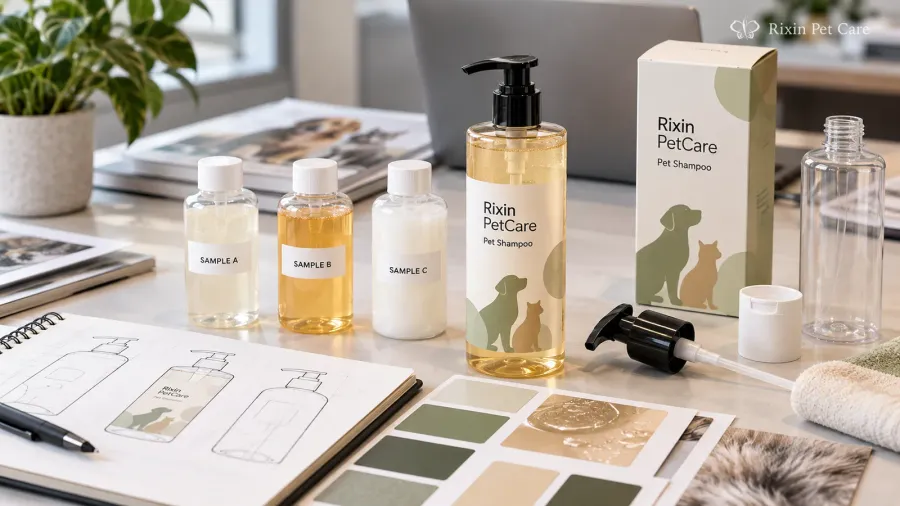
- Formula sample in a temporary container: useful for early formula review, but it does not confirm the final package.
- Packaging sample using a selected component: useful for early dispensing and fit observations, but some details may remain provisional.
- Production-intent system: uses the intended formula, container, closure, fill volume, label or decoration, and pack-out direction.
A successful formula sample in a generic bottle does not prove that the final pump or sprayer will work as intended. A small packaging sample may also leave questions about bulk filling, assembly, storage, packing, or shipment.
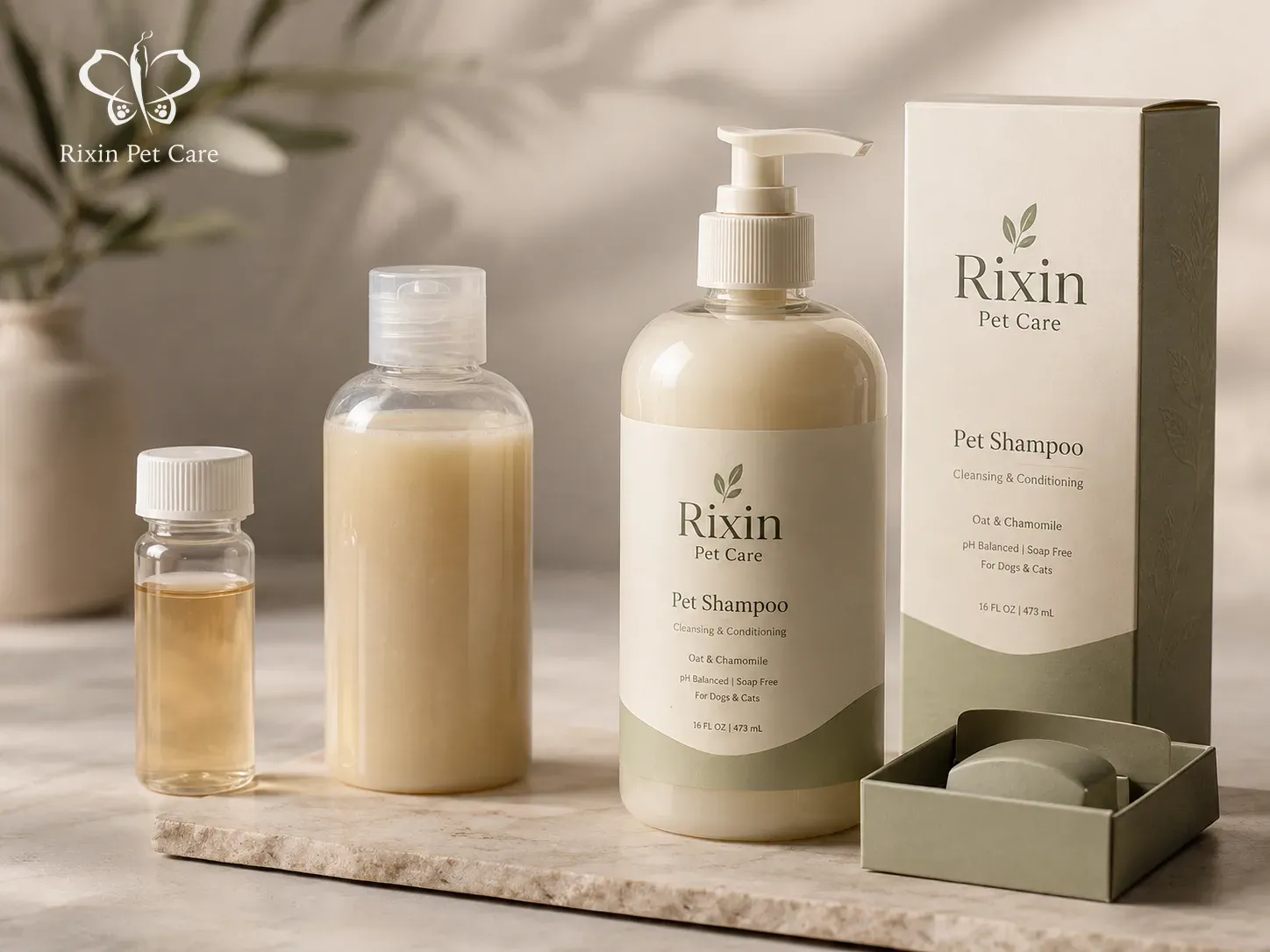
Include compatibility decisions in the overall pet grooming development timeline, especially when packaging or formula changes could affect later stages.
Know What Changes May Require Another Review
Another review may be needed when the project changes:
- formula or viscosity;
- fragrance or ingredient system where relevant;
- bottle or pouch material;
- closure, pump, sprayer, foamer, liner, seal, gasket, or dip tube;
- fill volume;
- label or decoration that affects package function;
- supplier or component specification;
- shipping orientation, insert, carton, or pack-out.
The effect depends on the change. Do not assume that every change requires the same work, but do not assume that a previously reviewed result automatically applies to a new component.
Buyer Compatibility Checklist
Add these questions to the pet grooming product brief:
FORMULA
Approved formula or version:
Known viscosity or flow behavior:
Product format:
Expected storage conditions:

CONTAINER
Container material:
Fill size:
Intended fill volume:
Headspace requirement:
Production-intent component confirmed:

CLOSURE AND DISPENSING
Closure type:
Pump / sprayer / foamer:
Dip tube:
Liner or seal:
Locking or tamper-evidence feature:

USE AND TRANSPORT
Primary sales channel:
Upright or sideways exposure:
Ecommerce shipment:
Professional-use handling:
Inner and shipping protection:

CONFIRMATION
What has been reviewed:
What remains provisional:
What changes may require another review:
Who confirms the final system:
This is a buyer-preparation checklist, not a compatibility certificate or pass/fail record.
The final project record should identify the reviewed version, what remains provisional, and who confirms the final system. That may involve the buyer, manufacturer, packaging supplier, or another responsible technical party.
Confirm the Exact System
Select a packaging direction, then use the buyer checklist to confirm the exact formula and production-intent package under the conditions that matter to the project.
That means reviewing the formula, container, closure, seal, dispensing method, fill level, handling, and shipping direction as one connected system rather than treating the bottle as a separate visual decision.
Ready to Discuss Your Pet Grooming Product Project?
Share your product type, target market, packaging direction, estimated quantity, and any support you need. A rough brief is enough to start a practical next-step discussion.