Private Label Pet Grooming Wipes Specifications: What Brands Should Define Before Sampling
Written by: Rixin Pet Care Editorial Team
Reviewed by: Product Development Team for manufacturing context and claim-risk alignment.
This content is provided for product planning, packaging discussion and claim-risk awareness. It is not veterinary advice, treatment guidance or market authorization.
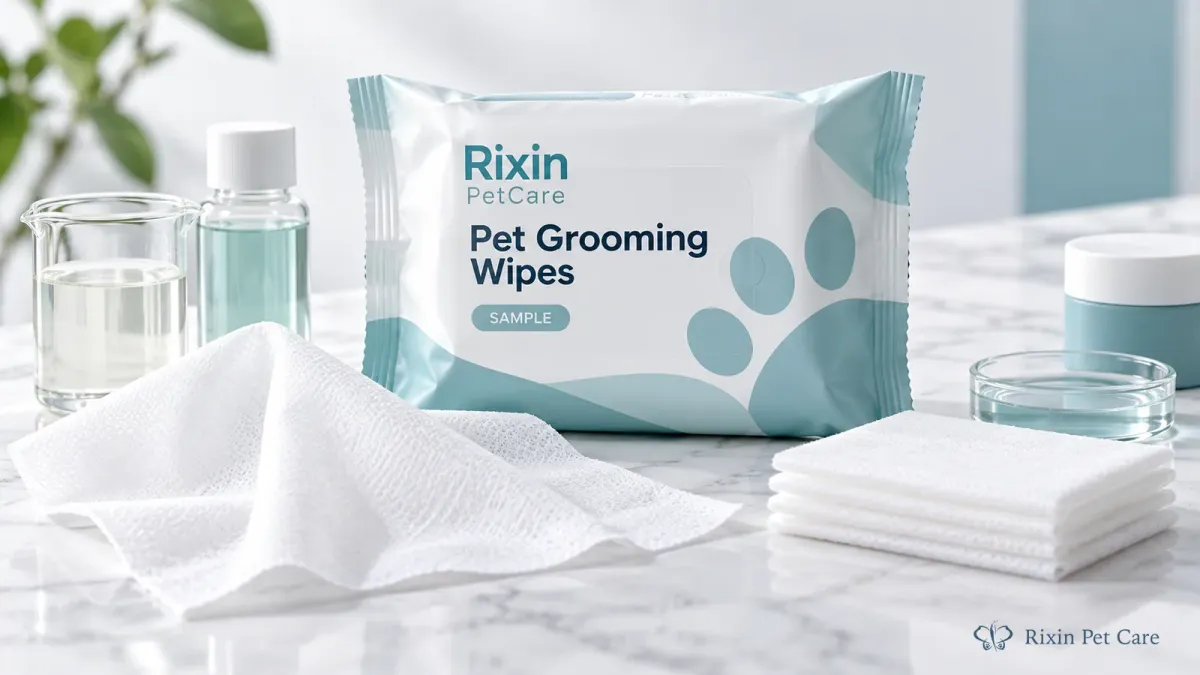
A private label pet grooming wipes project can sound clear—“soft wipes for everyday paw and coat cleanup”—while leaving most of the decisions a manufacturer needs unanswered. What material should the sheet use? How large should it be? How much liquid should it hold? Will the customer pull it from a travel pouch, a flip-top pack, or a tub?
For brand owners, the goal before sampling is not to choose technical numbers without supplier input. It is to turn the product idea into a consistent specification discussion so the wipe, liquid and package can be developed as one finished product.
This guide covers the pre-sampling specification stage. If you are still choosing the commercial product route, start with Rixin’s private label pet grooming wipes product page.
This article supports B2B product planning, packaging discussion and claim-risk awareness. It does not establish an approved formula, validated performance specification, veterinary recommendation or market authorization.
Quick Answer: What Should a Pet Grooming Wipes Specification Include?
A useful first specification records eight connected decisions:
- Use and market: intended animal, grooming area, routine, target market and sales channel.
- Substrate: proposed material composition, surface feel, texture and measurable material fields to confirm.
- Sheet: unfolded dimensions, fold arrangement, handling and dispensing expectations.
- Liquid: cleansing or freshening direction, ingredient preferences, fragrance and intended finish.
- Moisture: how the desired wetness should be described, measured and confirmed with the supplier.
- Pack: pouch, travel format, tub or refill direction, wipe count and the pack configuration.
- Closure and artwork: opening, reseal or lid, printed information and market-facing wording.
- Open decisions: which items are required, preferred or still to be confirmed before samples are made.
A first brief does not need invented GSM, liquid-loading ratios or manufacturing tolerances. If those values are unknown, write “Supplier to confirm” and explain the experience the finished wipe should provide.
Why a Product Idea Is Not Yet a Wipes Specification
A wet wipe is a coordinated product system: the sheet substrate, liquid formulation, dimensions and fold, dispensing opening, and finished pack influence one another.
For example, a larger sheet may call for a different fold or pack size. A different material can change how the liquid is held and released. A closure can affect the experience of opening the package repeatedly. Each change can influence how the finished sample should be reviewed.
The initial specification therefore needs to connect the decisions—not simply list “gentle formula,” “premium wipe,” and “custom packaging” as separate wishes.
The general pet grooming manufacturer product brief helps organize the wider inquiry. The worksheet below goes one level deeper for a single wipes SKU before physical samples are requested.
1. Define the Grooming Job Before the Material
Start by describing what the buyer should do with the wipe.
A portable after-walk paw wipe, a broader coat-wipe product and a small travel pack may call for different dimensions, package formats and application experiences. The intended routine should determine which specifications you investigate, rather than the other way around.
Record:
- Intended animal: dogs, cats or another specified audience; do not assume one formula is suitable for every species.
- Use area: paws, coat or another routine grooming area. Eye-area and ear-area products require separately defined use and wording boundaries.
- Application: targeted spot wiping, a larger coat wipe-down or a quick travel cleanup.
- Product position: everyday grooming, travel convenience, fragrance-free preference or another clearly defined role.
- Target market and channel: destination country, ecommerce, retail, distribution or salon use.
Make the required product role separate from preferences. “For paws after walks” describes the intended use; “a premium soft-touch feel” is a preference until an acceptable sample direction is defined.
2. Specify the Wipe Substrate Without Guessing a Universal GSM
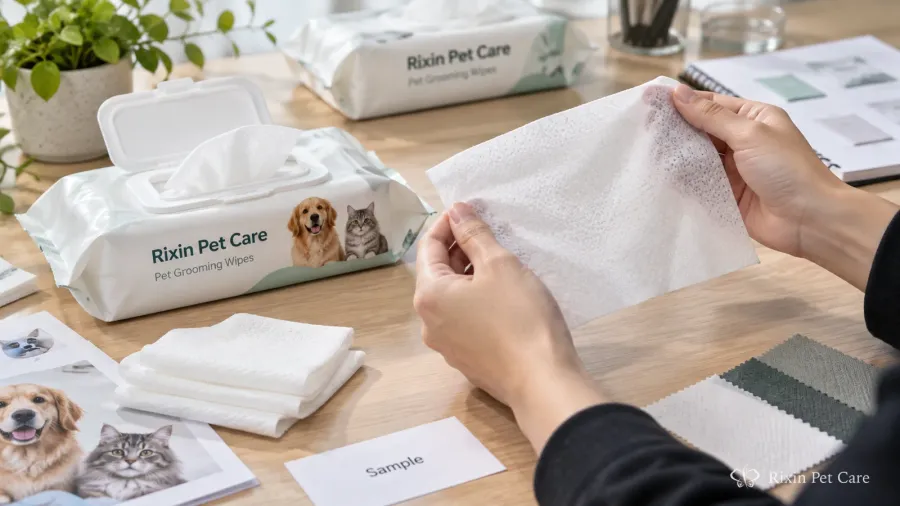
The substrate is the physical sheet that carries the liquid. Before requesting samples, give the manufacturer a clear material direction and ask which options fit the planned product.
Material composition and construction
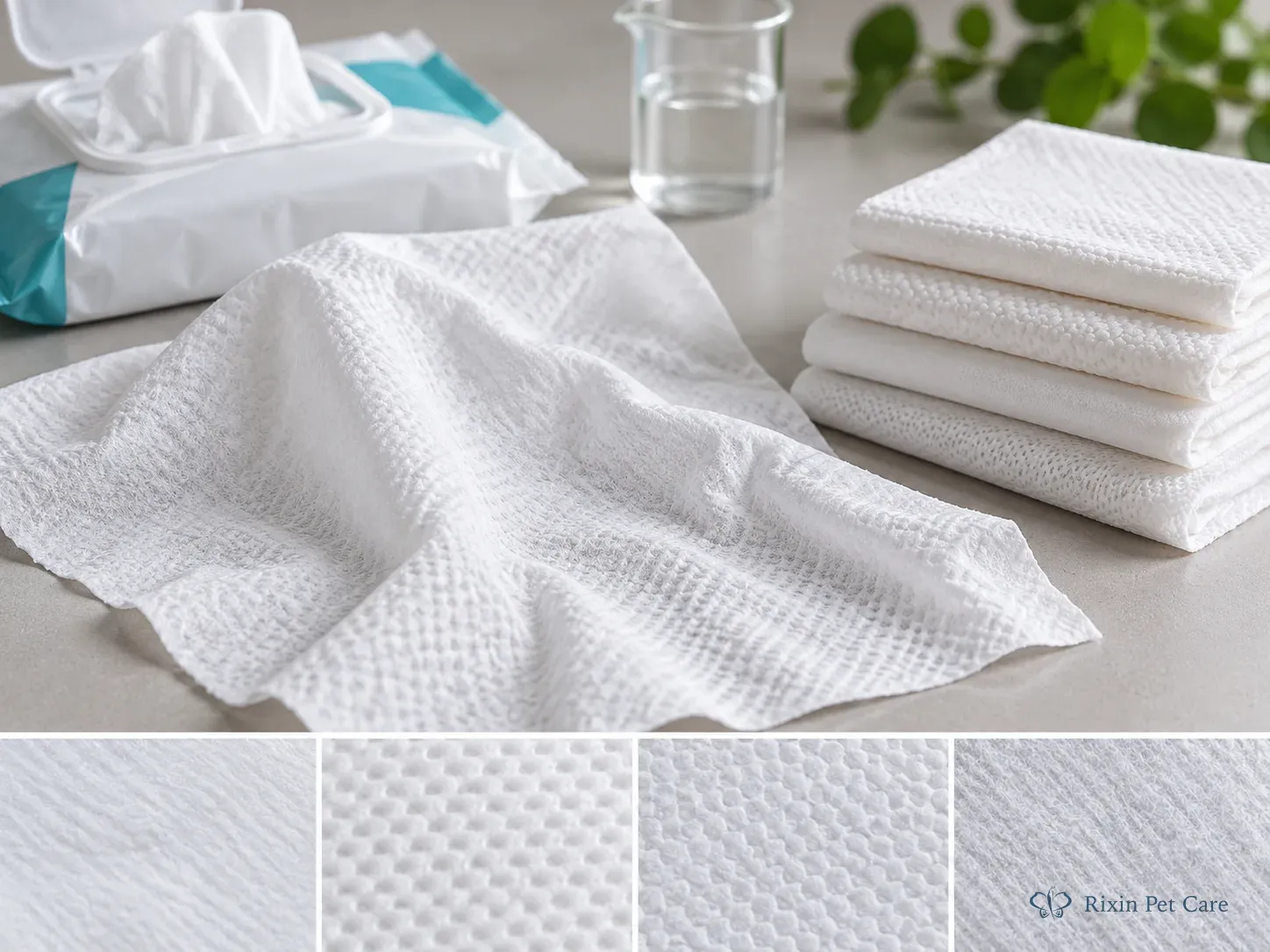
Ask the supplier to identify the proposed material composition and nonwoven construction, rather than accepting a broad label such as “soft fabric.” Possible industry material descriptions include spunlace/nonwoven constructions and different fiber compositions; availability and suitability must be confirmed for the specific project.
Ask what documentation can identify the selected material version. A fiber name alone does not tell you how the finished, saturated wipe will behave.
Basis weight, thickness and texture
GSM is a basis-weight measurement—grams per square meter of material—not a direct promise of thickness, softness or quality. Two substrates with a similar GSM can still differ in construction, texture and use experience.
Include these as separate discussion fields:
- Material composition or proposed substrate reference
- Basis weight (GSM), supplier-proposed or supplier-confirmed
- Surface texture (for example, smoother or more textured)
- Desired softness and handling feel
- Wet handling, stretch, visible lint or sheet-integrity concerns to check later
Do not copy a GSM number from a competitor listing and treat it as a required standard. Explain the desired routine and ask the supplier to propose feasible material choices with corresponding samples.
Material and environmental claims are different decisions
Terms such as bamboo-based, plant-derived, biodegradable and compostable do not mean the same thing. A fiber description does not prove the finished wipe or package qualifies for a disposal claim. If an environmental benefit is commercially important, request the relevant material composition and substantiation documents before approving wording. The U.S. FTC Green Guides explain why broad environmental claims require care.
3. Define Sheet Size, Fold and Count as One Configuration
An unfolded wipe can have a very different footprint from the sheet as it sits inside the retail pack. Record both the intended user-facing size and the proposed folding/dispensing direction.
Your brief should separate:
- Unfolded sheet dimensions: specify length and width with units, or mark as open.
- Folded format: ask how the sheet will be arranged inside the chosen pack.
- Dispensing expectation: for example, a customer should be able to take out a usable wipe without repeatedly struggling with the opening.
- Pack count: the number of wipes per finished retail unit.
- Configuration limits: supplier to confirm what combinations are feasible for the material, fold, count and pack.
It is acceptable to write “Target size: supplier proposal requested.” It is not helpful to leave “large sheet” as the only dimension guidance if packaging artwork and cost estimates will depend on the result.
Do not set arbitrary sheet-size tolerances or define a universal fold type in the initial article. Those details belong to the agreed supplier specification after the manufacturing route is known.
4. Describe the Liquid and Moisture Direction
Wet wipes are a material-and-liquid product, not simply a dry sheet with a scent added.
Describe the intended formula direction in language the supplier can assess:
- Grooming function: the routine cleansing or freshening job, without treatment or disinfection promises.
- Use context: intended species and grooming area.
- Ingredient preferences and exclusions: clearly label each as a request to assess, not proof of suitability.
- Fragrance direction: preferred scent, light scent or fragrance-free preference; no automatic sensitivity claim.
- After-use feel: the desired perception of wetness, residue or finish.
- Documents and reviews: which project-specific formulation, preservation, microbiological, stability or claim questions need supplier discussion.
For a customized formula, pet grooming formula development support is the relevant service route. A proposed ingredient list does not, by itself, establish that a completed wipe formula is suitable for the intended animal or target market.
Avoid an undefined “extra wet” specification
“Very wet wipes” may sound descriptive, but it does not establish a reproducible project requirement.
Ask the supplier to explain which liquid-loading measurement it uses, how the reference configuration is recorded, and what range—if any—is feasible for the selected substrate and pack. Specify whether a proposed value relates to a dry-sheet mass, finished-pack mass, liquid quantity per sheet, or another agreed basis. Do not mix units or assume different suppliers use the same calculation.
If no method or target has been confirmed, record the desired user experience and leave the numerical field open. Material choice, pack count, closure and liquid direction should be reviewed together before a final specification is approved.
5. Select the Finished Pack and Closure Together
The package is part of the product specification because it holds the pre-moistened wipes, controls access and carries market-facing information.
Common project directions to discuss include:
| Pack direction | Specification questions to record |
|---|---|
| Soft pack / flip-top pouch | Opening position, reseal or lid direction, count, pack footprint and artwork space |
| Travel pack | Portability, proposed count, opening style and intended use scenario |
| Tub / rigid container | Container and lid direction, dispensing opening, count and handling |
| Refill / multipack | Relationship to the primary pack, bundle/outer packaging and how the refills are identified |
These are discussion routes, not statements that every combination is currently available or made in-house by Rixin. Final feasibility depends on the project and supplier confirmation.
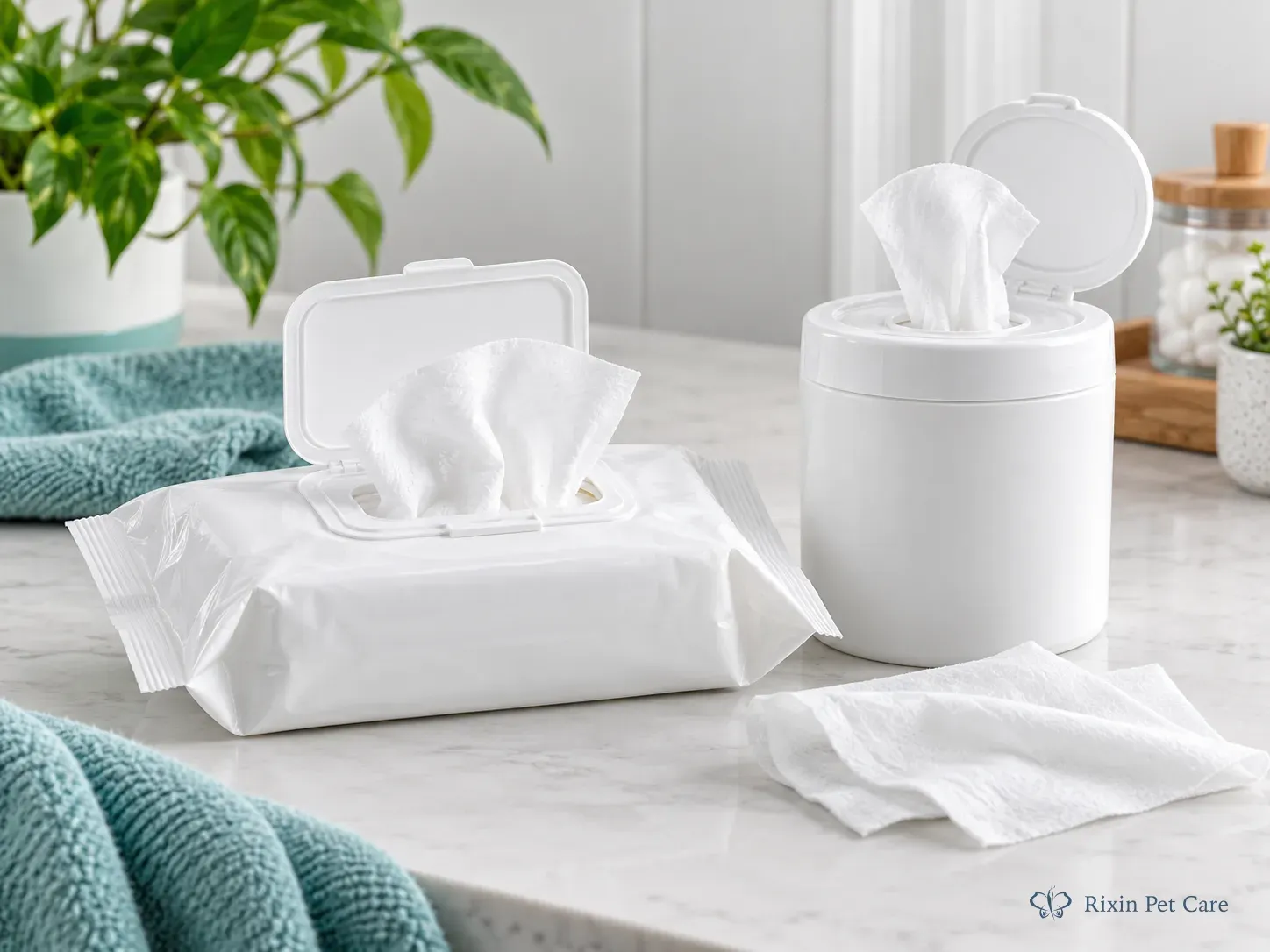
Also record the proposed label language, barcode/retail needs, pack identification and target market. Details such as film structure, sealing construction, pack integrity, transport conditions or confirmed moisture retention require supplier review in the specific configuration.
For broader packaging decisions see the private label pet grooming packaging guide. For why the finished formula and pack must be evaluated as one system, refer to the formula–packaging compatibility guide.
6. Copyable Pet Grooming Wipes Specification Worksheet
Use one worksheet per intended finished SKU. Copy it into your manufacturer inquiry and keep unresolved fields visible.
The status entries below are examples, not universal requirements. Change each status to match your own project’s non-negotiables, preferences, and questions for the supplier.
The right-hand column is for the supplier’s response; it is not a claim that a particular Rixin factory method or specification is already approved.
| Field | Buyer’s proposed requirement or question | Status | Supplier response / evidence |
|---|---|---|---|
| Product role / use area | Intended routine, species and application area | Required | To confirm |
| Market / channel | Destination market and selling route | Required | To confirm |
| Substrate composition | Proposed material or request for feasible options | To confirm | To confirm |
| Basis weight (GSM) | Supplier to recommend for intended use | To confirm | To confirm |
| Texture / handling | Softness, surface feel and wet-handling goals | Preferred | To confirm |
| Unfolded sheet dimensions | Desired coverage and measurement units | To confirm | To confirm |
| Fold / dispensing | Expected presentation in selected pack | To confirm | To confirm |
| Wipes per pack | Target count or options to quote | To confirm | To confirm |
| Formula direction | Routine cleansing/freshening; ingredient requests | Required | To confirm |
| Fragrance / finish | Preference and product-use context | Preferred | To confirm |
| Moisture / liquid loading | Desired feel; supplier to define measurement basis | To confirm | To confirm |
| Packaging format | Soft pack, travel pack, tub, refill or other route | Preferred | To confirm |
| Closure / opening | Reseal or lid preference; dispensing expectation | To confirm | To confirm |
| Artwork / market wording | Language, directions, required pack details and review needs | To confirm | To confirm |
| Estimated order | Initial quantity by SKU; pricing basis requested | To confirm | To confirm |
| Sample and documentation | Sample versions; target shelf-life and storage/transport needs; preservation, microbiological, stability, and formula–package compatibility questions for supplier scoping | To confirm | To confirm |
| Responsible party | In-house / external partner / buyer-supplied work | To confirm | To confirm |
How to use the Status column:
- Required: a non-negotiable project need that affects whether an option is suitable.
- Preferred: a desirable direction for which alternatives may be considered.
- To confirm: an unresolved value, method, supplier capability or document that must not be represented as agreed.
For example, a brand might require a resealable, portable daily-grooming wipe pack while leaving the specific material weight and liquid-loading unit for the supplier to recommend. That is a usable starting brief, not a finalized production specification.
7. Decide What Must Be Confirmed Before the First Sample
You do not need to finish every technical field before contacting a manufacturer. You do need enough shared context to avoid sampling two different ideas under the same product name.
Use these three planning gates:
Gate 1 — Ready for a useful supplier discussion
The intended use, market, pack direction and material/liquid preferences are understood. Unknown values are clearly labeled, not silently assumed.
Gate 2 — Ready to request a defined sample direction
The buyer and supplier agree which material, sheet configuration, liquid direction and pack are being represented, and identify any alternatives. Ask which work is in-house, partner-supported or buyer-supplied where that matters to schedule, control and documentation.
Gate 3 — Ready to review the physical sample
The supplier identifies the sample version and the proposed specification fields that sample is intended to represent. Open technical or market questions remain assigned to a decision owner instead of disappearing from the record.
Actual wipe dispensing, wet handling, moisture distribution and repeated-opening performance belong to physical sample evaluation, not this pre-sample specification article. Use the existing pet grooming sample evaluation guide for version control, comparable feedback and approval decisions.
8. Common Specification Mistakes to Avoid
Copying another supplier’s numerical data. A listed GSM, sheet size or loading ratio may belong to a different substrate, liquid or pack. Treat it as a reference to discuss, not a universal target.
Choosing the pouch before defining the wipe. Sheet size, fold, count, wetness and packaging need to be assessed together. Early artwork may need revision if the physical pack changes.
Writing “soft, safe and hypoallergenic” without criteria or evidence. Define the intended use and desired feel. Safety and marketing claims require appropriate support and market-specific review; a buyer preference is not substantiation.
Treating a material claim as a finished-product environmental claim. Fiber sourcing and biodegradability or compostability are separate questions requiring evidence for the specific claim.
Assuming a listed pack format proves a specific production line. Confirm which supplier or partner handles each stage and which documentation applies to the chosen configuration.
Treating a first specification as final approval. Supplier feedback, feasibility discussions, physical sample review and applicable documentation can change the production-ready specification.
Frequently Asked Questions
What GSM should I choose for private label pet grooming wipes?
There is no universal GSM that fits every grooming wipe. GSM describes substrate basis weight; it does not independently determine softness, thickness or wet-wipe performance. Give the manufacturer the intended use and required feel, then request feasible materials and confirm the proposed basis weight.
Do I need to know the exact liquid-loading ratio before asking for samples?
Not necessarily. Describe the intended use and desired wetness, and ask the supplier to propose a measurement method and project-specific direction. Never use a numerical target without an agreed unit and reference configuration.
Should I choose the pack format or the formula first?
Define the intended grooming job first, then discuss the liquid, sheet and pack as a connected system. You can begin with a preferred pack route, but it should stay conditional until the material and liquid direction can work with the proposed closure and dispensing arrangement.
Is this worksheet enough to approve manufacturing?
No. It is a structured starting point for supplier evaluation and sample planning. Material versions, finished samples, testing/documentation scope, claims, commercial terms and production responsibilities must be reviewed as relevant before approval.
Can I market wipes as antibacterial, hypoallergenic or biodegradable?
Do not assume those claims follow from a proposed material or ingredient list. Intended use and promotional wording can affect regulatory treatment, and environmental claims need their own substantiation. For the U.S., the FDA’s animal grooming aids guidance is one relevant starting point; use Rixin’s label and claim market review support to discuss product-specific wording questions. Requirements vary by market and proposed claims.
Final Recommendation: Specify the Wipe as One Finished Product
Before sampling, do not approve a substrate, liquid and pouch as three disconnected choices. Put the intended grooming use, material fields, sheet geometry, liquid direction, pack configuration and open questions into one versioned buyer brief.
The result should make it easy for a supplier to answer three questions: What are we being asked to develop? Which details are confirmed? What still needs a decision before samples?
Ready to Discuss Your Pet Grooming Wipes Project?
Review the private label pet grooming wipes product direction, then request a proposal with your intended use, target market, proposed pack and worksheet. A complete technical specification is not required to begin the discussion; unresolved fields can be marked for review.
Ready to Discuss Your Pet Grooming Product Project?
Share your product type, target market, packaging direction, estimated quantity, and any support you need. A rough brief is enough to start a practical next-step discussion.