Private Label Pet Grooming Packaging Guide
Written by: Rixin Pet Care Editorial Team
Reviewed by: Product Development Team for manufacturing context and claim-risk alignment.
This content is provided for product planning, packaging discussion and claim-risk awareness. It is not veterinary advice, treatment guidance or market authorization.
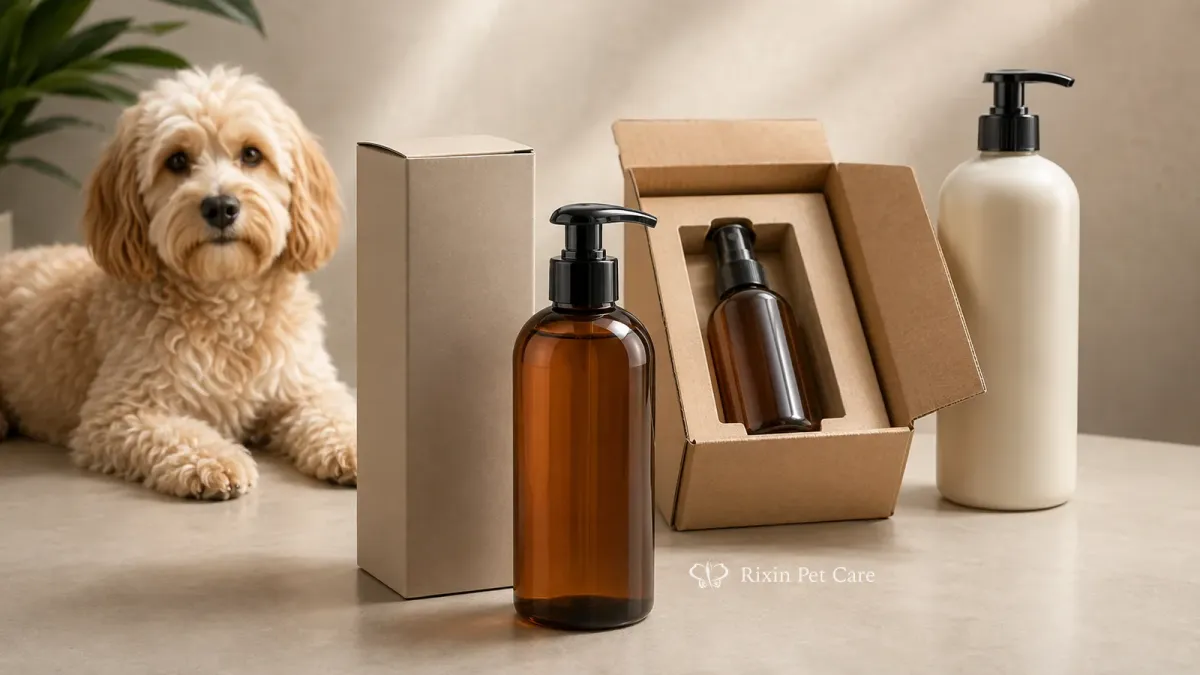
An attractive bottle can still be the wrong choice if it does not dispense the formula well, fit the sales channel, survive normal handling, or remain available for reorders.
The first packaging decision should therefore be a direction, not a final component approval. Choose a system that fits the product format, intended use, channel, quantity, and launch plan. Then review the selected formula and packaging together before bulk production.
For the wider launch framework, read the complete private label pet grooming products guide.
This content is for B2B product and packaging planning only. It does not confirm formula compatibility, transport performance, market compliance, recyclability, or final package approval.
Quick Answer
Use this sequence:
- Define the product format and intended grooming use.
- Choose how the product should be dispensed.
- Select a practical fill size for the main channel.
- Choose stock, special-order, or custom packaging.
- Review the complete system, not only the container.
- Identify leakage, sealing, handling, and transport questions.
- Confirm component MOQ, continuity, and unused-material responsibility.
- Move the selected direction into formula–packaging review.
The simplest suitable system is usually a better starting point than adding custom components without a clear product or commercial reason.
Start With Product Format and Use
Packaging should follow how the product behaves and how the user applies it.
| Product format | Packaging directions to consider | Main questions |
|---|---|---|
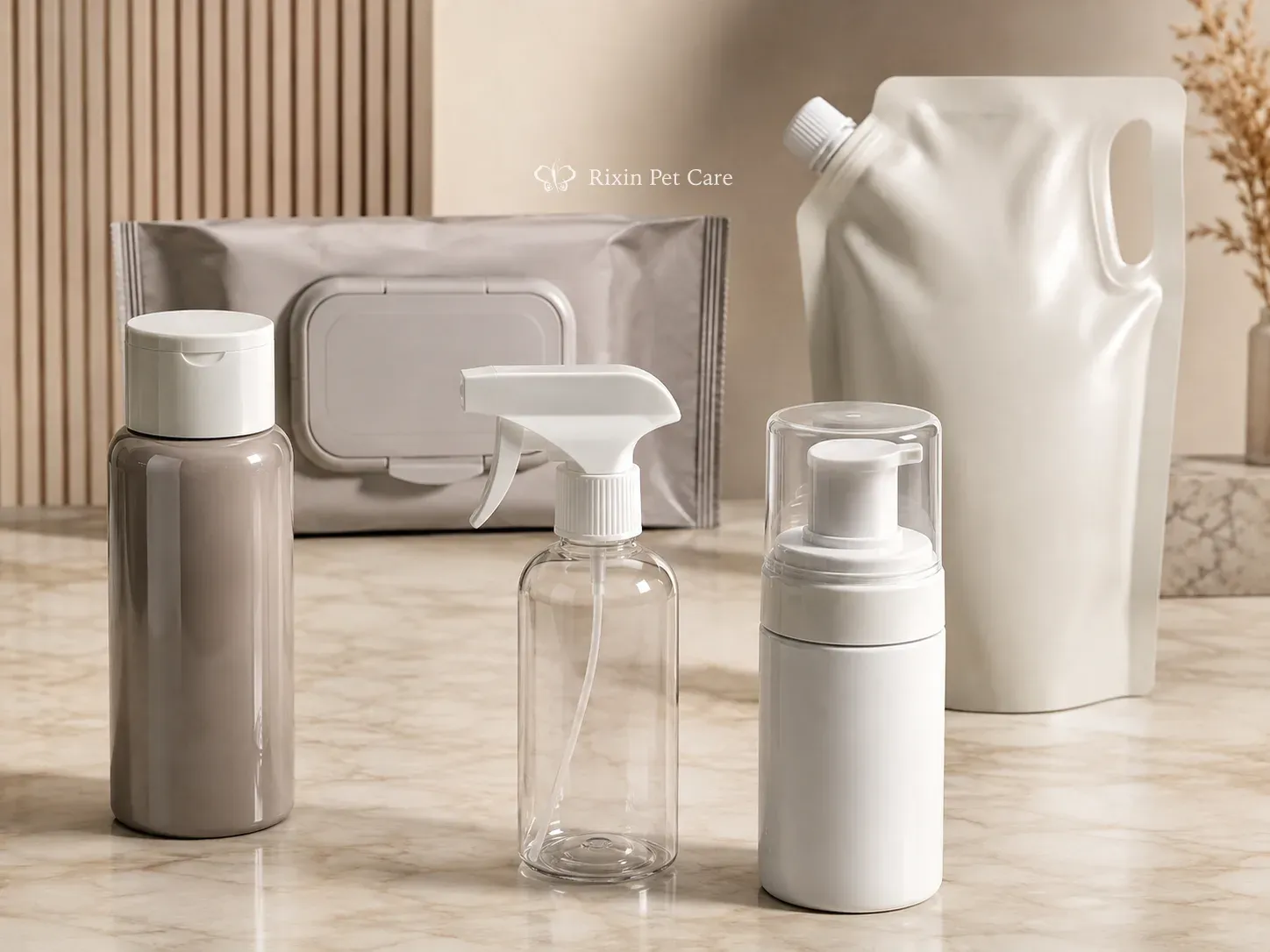
| Rinse-off shampoo or conditioner | Bottle with cap, pump, or salon-size closure | Viscosity, wet-hand use, dosing, residue |
| Grooming spray | Bottle with trigger or fine-mist sprayer | Output, leakage, spray pattern, clogging |
| Foam product | Bottle with foaming pump | Formula structure, foam output, pump availability |
| Wipes | Pouch, tub, or canister | Wipe count, moisture retention, seal, dispensing |
| Refill or salon format | Pouch, gallon container, or larger bottle | Handling, pouring, storage, professional use |
These are starting directions, not universal approvals. A fine-mist sprayer may suit one grooming liquid but not another. A pump that works with a light lotion may struggle with a thicker product. The formula, closure, and expected use should be reviewed as one system.
Shampoo and No-Rinse Packaging Example
A buyer may compare the package direction with the product format like this:
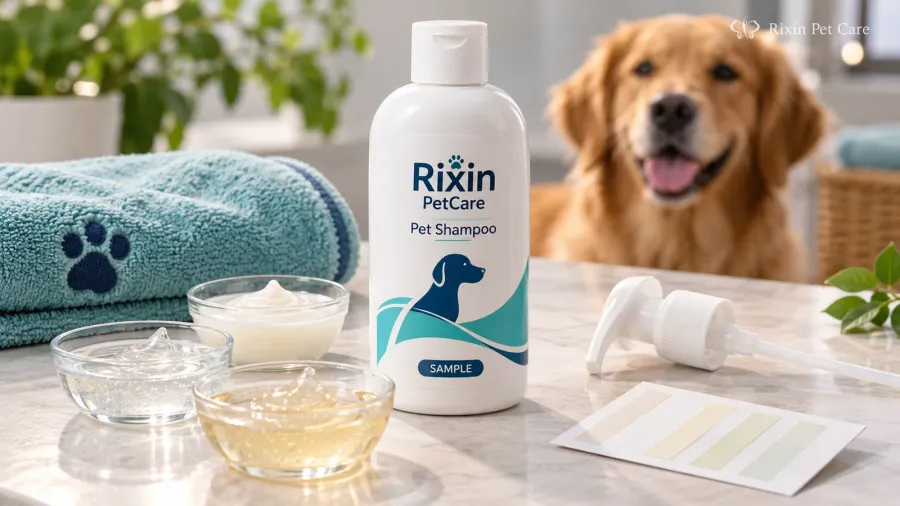
- Rinse-off shampoo: bottle with a cap or pump, with consistency considered alongside wet-hand dosing and dispensing.
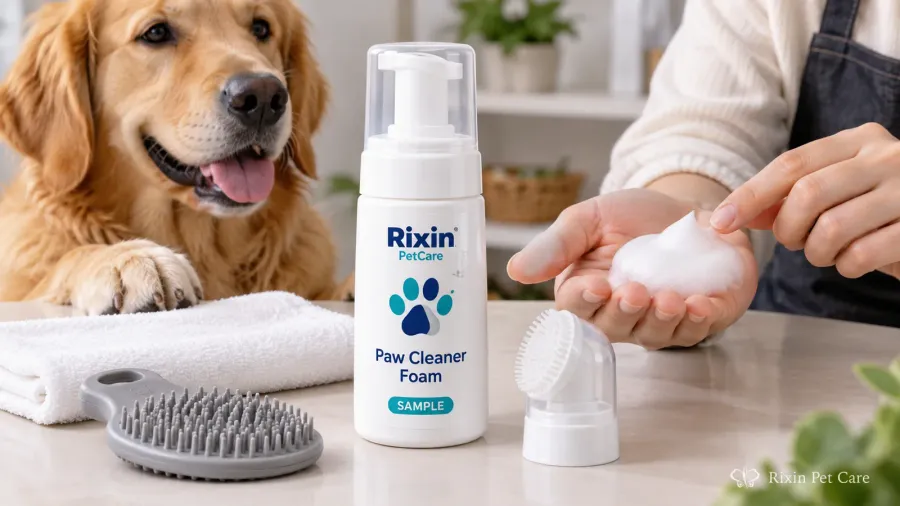
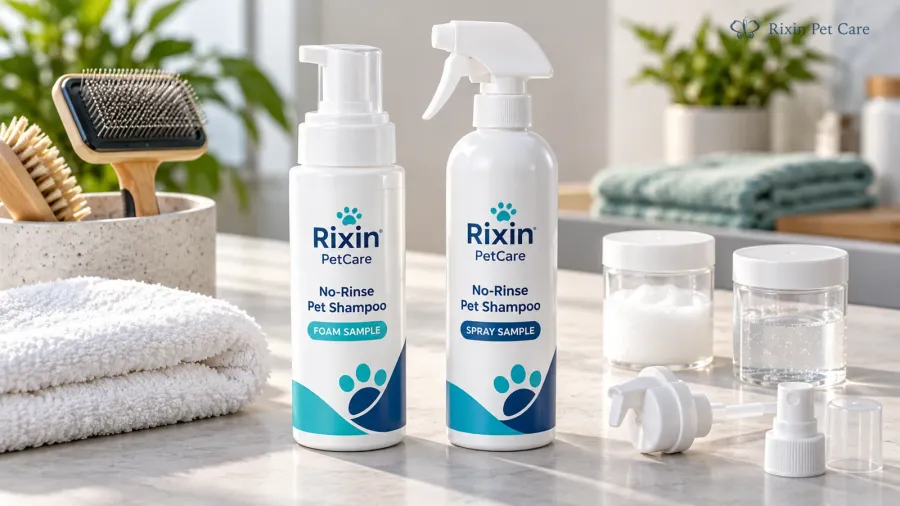
- No-rinse foam: foamer pump, with the formula and pump discussed together for the intended foam delivery.
- Fine-mist product: spray system, with the formula and actuator reviewed together for the intended delivery pattern.
These are planning observations, not formal compatibility results. A visible package choice still needs the appropriate formula–packaging review before approval.
Choose Fill Size for the Channel
There is no universal best fill size. The right range depends on the channel, use frequency, price position, handling, and component availability.
For ecommerce, consider shipping weight, parcel dimensions, leakage exposure, and whether the product will travel upright. For retail, review shelf space, label area, barcode placement, and the price the package needs to support.
Salon and professional products may need larger formats, controlled pumping, or easier pouring. Trial sizes can support sampling, but small components may have different availability and minimums. Refill formats also need clear transfer, storage, and closure planning.
Start with one main size unless a second size serves a distinct use case. Several sizes create separate components, labels, filling work, stock commitments, and reorder decisions.
Choose a Packaging Sourcing Route
| Route | Main advantage | Main trade-off | Best fit |
|---|---|---|---|
| Stock packaging | Faster starting point and lower development complexity | Less structural differentiation | First launch, simpler project, market validation |
| Special-order packaging | More choice in color, finish, closure, or component | Higher minimums and longer sourcing | Established concept needing visible differentiation |
| Custom packaging | Greater structural control | Tooling, sampling, minimums, timing, and continuity risk | Proven product with a clear commercial reason |
“Stock” means an existing component direction, not guaranteed immediate availability. Color, quantity, closure combination, and production scheduling still need confirmation.
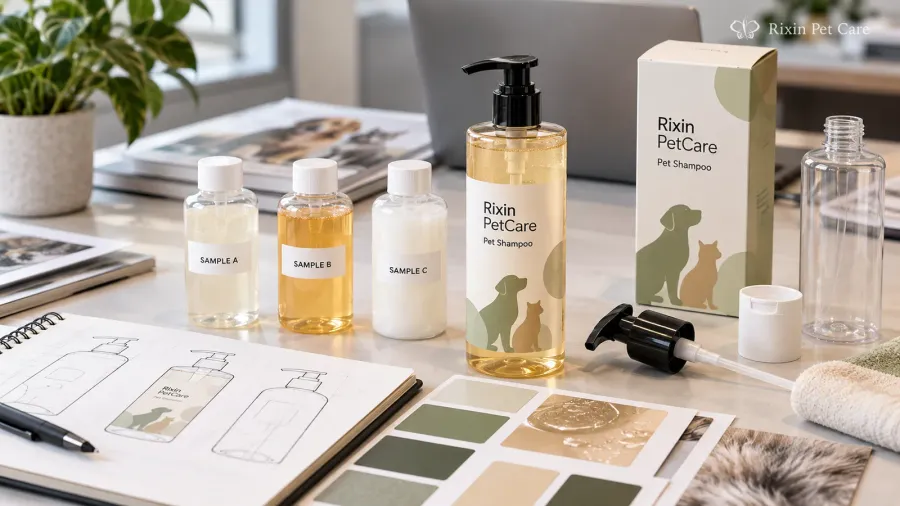
Special-order packaging may use an existing bottle or closure with a selected color, finish, decoration, or component combination. Fully custom packaging may require molds, tooling, technical drawings, samples, and a stronger reorder commitment.
Custom packaging is not automatically more suitable or commercially valuable. Use it when the package itself supports a clear user, channel, or brand need that stock options cannot meet.
Review the Complete Packaging System
The buyer is not choosing only a bottle. The complete system may include:
- container;
- cap, pump, sprayer, foamer, or lid;
- liner, seal, overcap, or tamper-evidence feature;
- label, printed decoration, sleeve, or carton;
- inner protection and shipping carton.
Ask whether the closure matches the intended use. A product used with wet hands may need different handling from a fine-mist coat spray. A professional pack may prioritize dosing and durability, while a retail pack may need more label area or shelf presence.
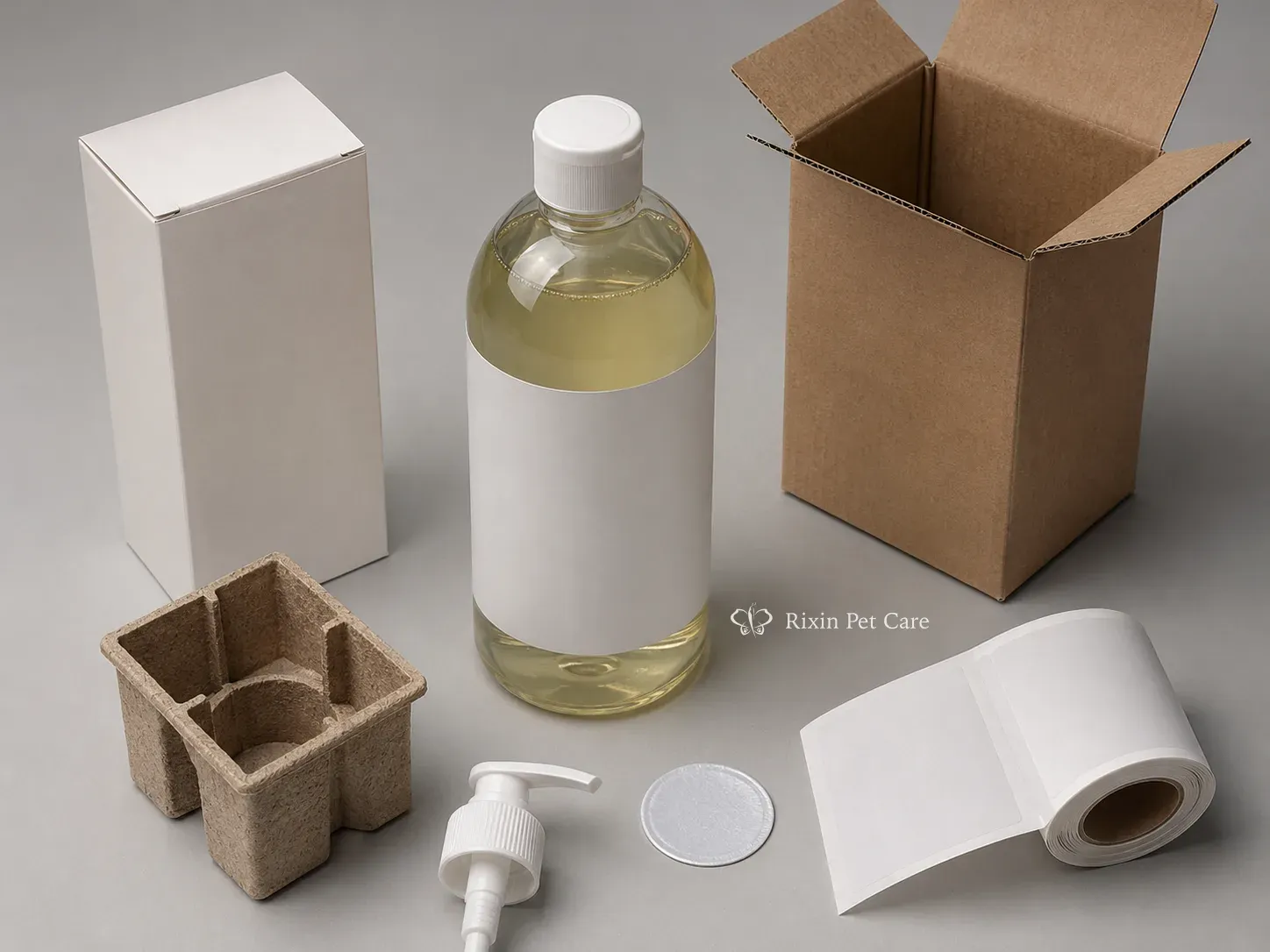
Also confirm whether the package needs a carton, seal, overcap, divider, bag, or other protection. The answer depends on the package, channel, transport route, and buyer requirements.
Where possible, consider a component family that can support future SKUs. Reusing a suitable bottle or closure family may simplify sourcing and visual consistency, but each formula and fill size still needs its own review.
Check Operational Requirements
Before approving a packaging direction, identify the operational questions that the manufacturer or component supplier must review:
- Does the product dispense at the intended rate?
- Can the closure be assembled and tightened consistently?
- Could the formula, closure, or storage position increase leakage risk?
- Is tamper evidence needed for the target channel?
- Will the unit be sold or transported upright, sideways, or in mixed parcels?
- Can the label be applied to the chosen shape and surface?
- Does the pack-out protect pumps, triggers, caps, and printed surfaces?
- Can the filling and packing process handle the selected component?
A package that looks suitable in a catalogue is not automatically suitable for the finished product. Final review may depend on formula properties, fill volume, headspace (the empty space above the filled product), closure fit, sealing, transport conditions, and production handling.
Packaging research can begin before the final formula is approved. Final component approval should wait until the information needed for formula–package review is clear.
Check MOQ, Cost, and Reorder Risk
Bottle, closure, label, carton, and decoration minimums may be different. One component can therefore set the practical packaging minimum even when the finished-product quantity appears workable.
Custom color or decoration may also leave unused components. Confirm who owns them, where they are stored, whether fees apply, and whether they can be used for a future order.
Continued availability of the component matters as much as first-order availability. Ask whether the bottle and closure are regularly produced, whether substitutes are available, and what happens if a component is discontinued.
For detailed quantity mechanics, read the private label pet grooming MOQ guide. For project-level pricing and quotation scope, use the private label pet grooming cost guide.
Packaging Direction Checklist
Use this information when completing a pet grooming product brief:
PRODUCT
Product format:
Intended grooming use:
Target pet:
Formula route:
Viscosity or product behavior currently known:

CHANNEL AND SIZE
Primary sales channel:
Home / Professional / Both:
Preferred fill size:
Shipping or shelf constraints:

PACKAGING DIRECTION
Container type:
Closure or dispensing method:
Stock / Special-order / Custom:
Label only or label plus carton:
Tamper-evidence needs:
Transport or ecommerce concerns:

COMMERCIAL
Estimated quantity per SKU:
Number of sizes or artworks:
Target launch date:
Reorder expectations:

OPEN QUESTIONS
Manufacturer recommendations needed:
Compatibility questions:
Component availability:
Packaging MOQ:
Unused-component responsibility:
This is a packaging-direction brief, not a final technical specification. Packaging and label design support can help carry the selected system into artwork and production review.
Choose the Simplest Suitable System
Choose the simplest packaging system that can support the product format, intended user experience, sales channel, quantity, and reorder plan.
Then confirm formula and package performance together before bulk production. That sequence reduces avoidable complexity without treating packaging as a visual decision alone.
Ready to Discuss Your Pet Grooming Product Project?
Share your product type, target market, packaging direction, estimated quantity, and any support you need. A rough brief is enough to start a practical next-step discussion.