How to Evaluate Private Label Pet Grooming Wipes Samples Before Production
Written by: Rixin Pet Care Editorial Team
Reviewed by: Product Development Team for manufacturing context and claim-risk alignment.
This content is provided for product planning, packaging discussion and claim-risk awareness. It is not veterinary advice, treatment guidance or market authorization.
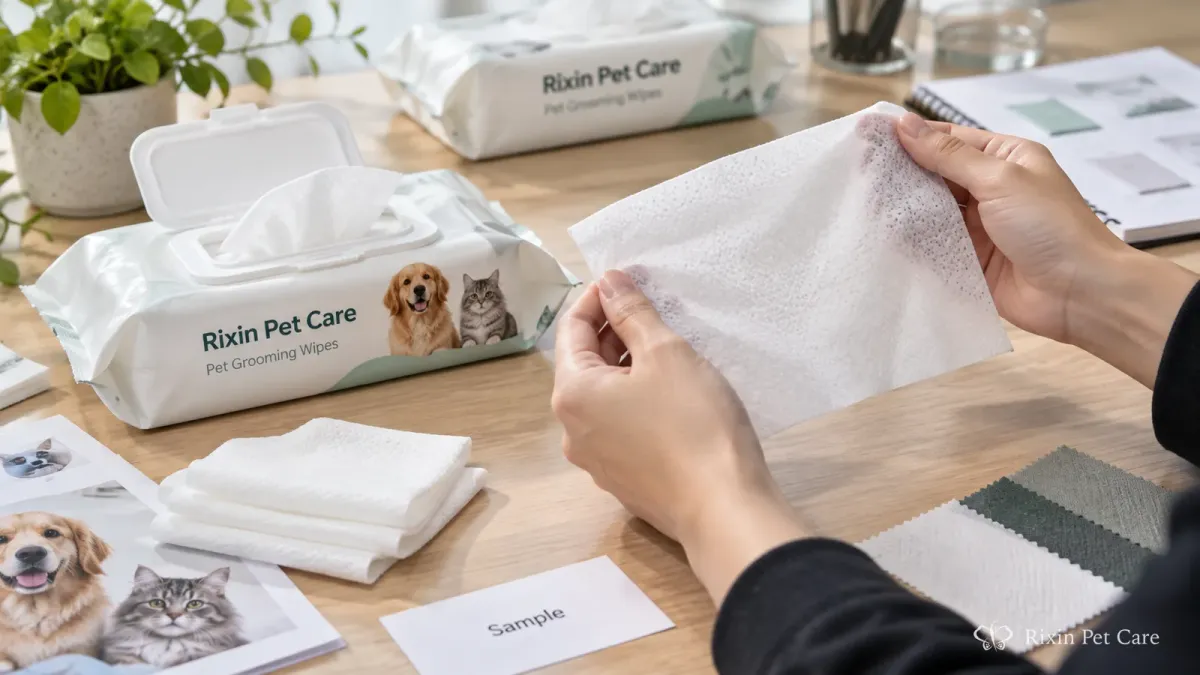
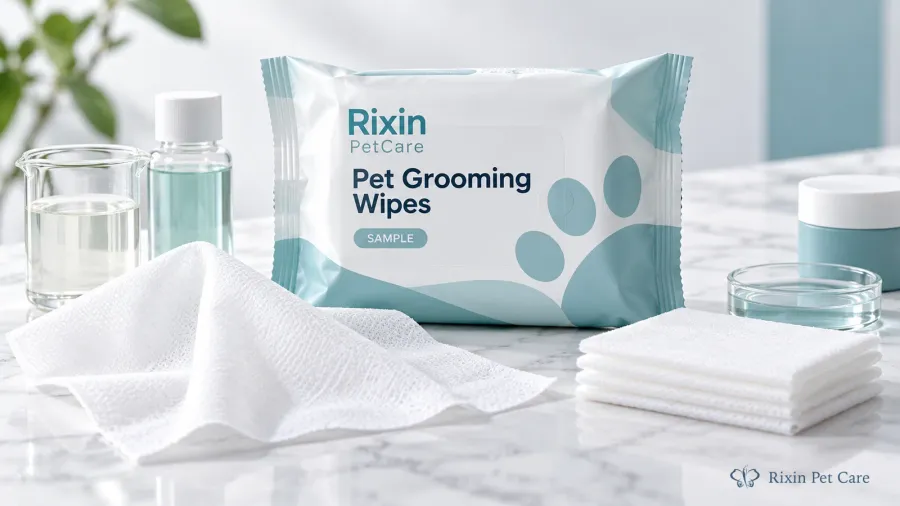
Start a private label pet grooming wipes sample review with the sheet, liquid and pack together. Check how a sheet comes out and unfolds, how it works for the intended routine, and how the pack closes again. The substrate—the wipe material—may feel right even when the sheets dispense poorly. Attractive packaging may still contain wipes that feel too dry or leave more residue than the brand intended.
Review the physical OEM sample against your brief: “Which parts meet our requirements?” and “Which parts should the manufacturer review before our next production decision?” Keep those answers tied to the actual sheet–liquid–pack combination.
This is a product-specific, buyer-side observation guide. It does not replace technical testing, animal-use suitability assessment or the manufacturer’s quality-control requirements. If the commercial product direction is still being selected, start with Rixin Pet Care’s private label pet grooming wipes options.
Quick Answer: Evaluate the Wipe, Liquid and Pack Together
A useful pet grooming wipes sample review concentrates on five connected questions:
| Physical review area | What the buyer is trying to learn | A useful feedback result |
|---|---|---|
| Sheet dispensing | Can the intended user remove and unfold a wipe without unnecessary difficulty or repeated multi-sheet pulls? | Identify a fold, opening or stack issue to discuss |
| Wet-sheet handling | Does the saturated sheet have the desired feel and remain manageable during the planned wiping action? | Describe softness, lint, stretching or tearing observed |
| Moisture distribution | Do the sheets you checked have a similar level of moisture and match the agreed target? | Record where visible wetness or dryness varies |
| Wiping experience | During the agreed review, does wiping leave the intended feel or unwanted residue? | Separate the liquid/finish concern from sheet feel |
| Pack and closure | Is opening, extracting and resealing workable for the planned use routine? | Identify a specific pack or closure revision |
These are not universal laboratory pass/fail tests. The outcome is a clear description of what was observed in the supplied configuration, what was not assessed, and what should be confirmed next.
The broader pet grooming sample evaluation guide already covers sample IDs, versions, consistent records and formal proceed/revise/hold decisions. Here we stay with the physical behavior of a pet grooming wipe.
1. Start With the Wipes Configuration the Sample Represents
A wipe sample is a connected set of components: material, liquid, sheet dimensions, fold, count, dispensing opening and closure. An attractive pouch containing a provisional sheet may not represent the final SKU.
Before touching the sample, identify the physical choices that are actually present:
- Sheet: the proposed substrate, texture and unfolded size, where the supplier has identified them.
- Liquid: the current intended grooming formula or a clearly labeled provisional liquid direction.
- Fold and stack: how sheets are arranged and supposed to come out of the pack.
- Count and fill: the sample’s stated wipe count and whether it resembles the intended pack configuration.
- Package: pouch, travel pack, tub or other agreed route, including the current opening and closure.
- Open substitutions: any components temporarily used for sampling rather than the production-intent configuration.
If you still need to define these inputs, use the earlier private label pet grooming wipes specifications guide. That guide handles what to request before sampling; this article handles what to observe after receiving the physical sample.
2. Check How the Sheets Dispense and Unfold
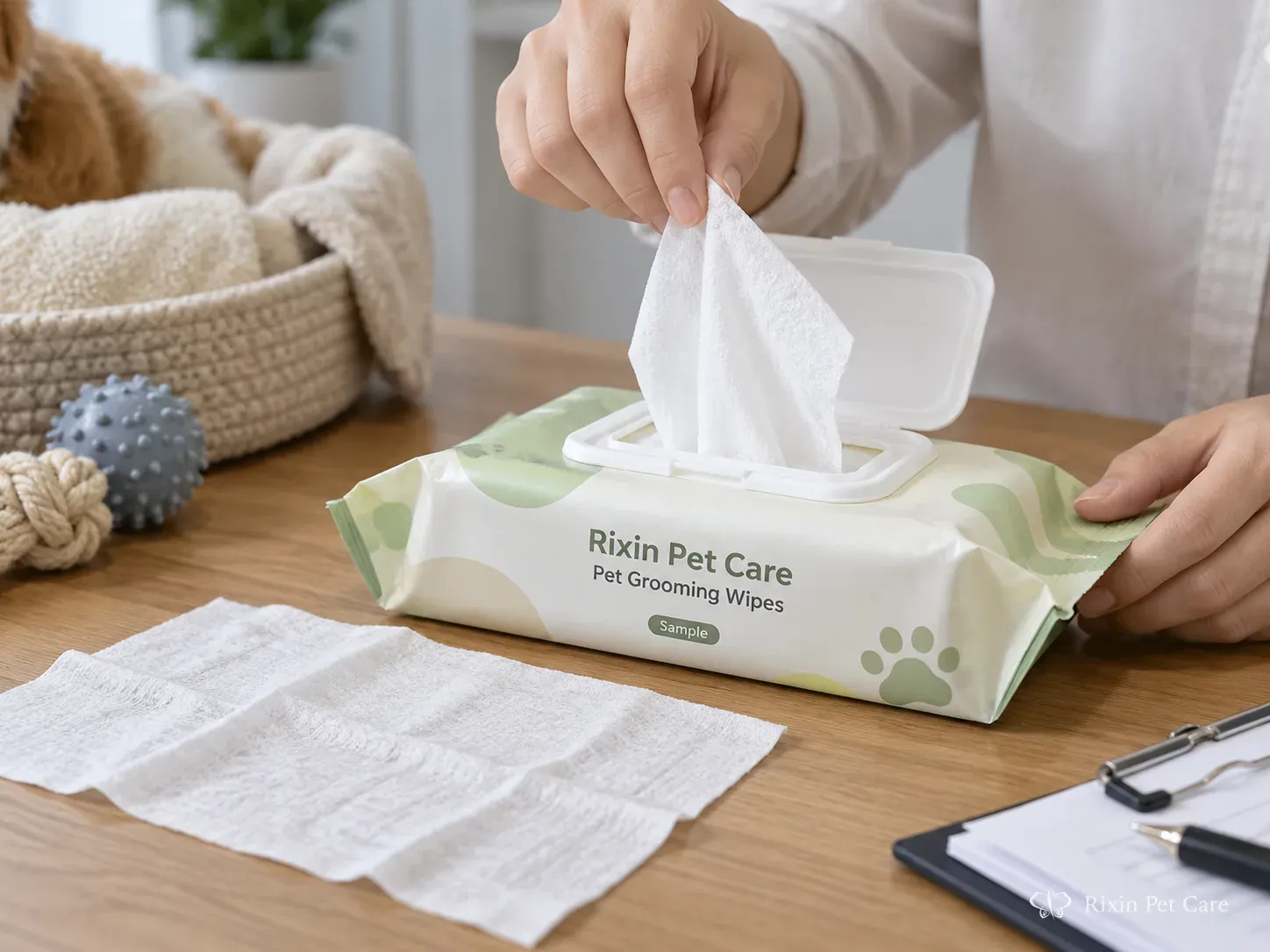
Check how easily the wipes come out of the pack. Dispensing affects everyday use even when the material and proposed liquid are otherwise acceptable.
Review the pack in a normal, appropriate way for its intended use. Observe how the opening, stack and sheet work together, rather than judging the lid or pouch alone.
Useful questions include:
- Can the first wipe be located and removed without tearing the sheet or fighting with the opening?
- Does the next sheet stay accessible after one is removed, if that is the intended dispensing arrangement?
- Are several sheets unintentionally pulled out together, or does the folded stack resist separation?
- Does a sheet unfold into a usable shape, or does it remain awkwardly bunched or tangled?
- Is the dispensing movement workable with the current pouch/tub opening and fill configuration?
- Does the practical handling match the brand’s intended portable, household or salon-use direction?
For example, “two sheets repeatedly came out together when we tried to extract one” is more useful than “the wipes are inconvenient.” The supplier can investigate fold arrangement, interleaving, opening geometry or other pack factors without being told to reformulate the liquid first.
3. Observe the Substrate as a Wet Sheet, Not a Dry Swatch
Check whether the finished wet sheet works for the planned routine. A dry sheet may feel soft but behave differently once saturated with the selected liquid.
During appropriate sample handling, observe:
- Hand feel: whether the saturated surface matches the intended smooth or textured direction.
- Unfolding and drape: whether the sheet can be opened and handled without excessive bunching.
- Wet handling: any visible stretching, distortion or tearing during normal intended movement.
- Lint or loose fibers: any obvious shedding noted during handling or an agreed evaluation step.
- Grip and control: whether the sheet can be held and moved as intended without repeatedly slipping or folding over itself.
These are practical observations, not a measured wet tensile-strength or lint-release result. Such measurements require an agreed technical method, defined acceptance requirements and suitable evidence from the responsible supplier or testing party.
“The current wipe feels suitably soft when held, but the sheet stretches noticeably while unfolding and is difficult to keep flat for the planned paw-grooming motion. Please review the substrate/construction direction with the same liquid version.”
4. Check Moisture Distribution and Liquid Release
Describe how the sheet and liquid work together in the portion of the sample you actually observed. “Wet enough” alone does not tell the manufacturer which sheets felt moist or dry.
Under a reasonable, documented review approach, consider whether there are noticeable differences:
- between the initial sheet and other sheets checked in the same sample pack;
- between separate areas of the same unfolded sheet;
- between sheets located at different accessible positions in the pack, where appropriate to the intended construction;
- in the amount of visible liquid released during the agreed, suitable wiping observation;
- in any visible pooling, unexpectedly dry feel or uneven saturation that affects handling.
You do not need to dismantle an entire sample pack to invent a moisture-distribution test. If a location or sheet cannot reasonably be evaluated, mark it not assessed.
When comparing sheets, record the pack’s condition, when and how it was opened, and which accessible sheets you reviewed. Observations made under materially different handling conditions are not directly comparable. If a pack is damaged, was left open unexpectedly or does not represent the intended fill, record that limitation rather than attributing every difference to the formula.
For instance:
“The first sheets removed felt consistent with the agreed moisture direction, but a later accessible sheet felt noticeably less moist. We cannot determine whether this relates to loading, pack configuration or handling. Please investigate that difference against the proposed finished-pack specification.”
This is useful development feedback without claiming that the product fails a measured loading tolerance. A moisture observation made today also cannot establish long-term moisture retention or shelf life. Those require separate evidence and agreed review conditions.
5. Review Wiping Experience and After-Use Finish Within the Intended Use
A grooming wipe combines nonwoven fabric, liquid and packaging for a defined routine, such as a project-specified paw or coat cleanup. The liquid can influence how the sheet feels and the finish it leaves behind.
First, confirm that the proposed formula and use context have been appropriately assessed for the intended evaluation. Do not apply an unapproved development formula to an animal merely to complete an informal blog checklist. Where appropriate, start with non-animal observations. Any proposed animal-use evaluation should follow the relevant product and intended-use assessment and be conducted responsibly under appropriate supervision. Avoid damaged or irritated skin, and do not turn eye-area or ear-area use into an extension of a general grooming-wipe review.
Where the review is appropriate, record observations such as:
- Does the sheet remain manageable through the planned wiping motion?
- Does the liquid appear to release in a way that fits the agreed product direction?
- Is there an obvious sticky, greasy, overly coated or otherwise unwanted finish in the evaluated context?
- Does any fragrance or apparent residue conflict with the brand’s agreed sensory direction?
- Is the issue localized to how the sheet handles, how the liquid behaves, or the combined experience?
A statement such as “we noticed a tacky after-feel in the agreed, appropriate evaluation context” can guide a formula discussion. It does not demonstrate irritation, animal safety, disinfecting efficacy or quantified cleaning performance.
6. Test the Usability of the Closure During Appropriate Repeat Opening
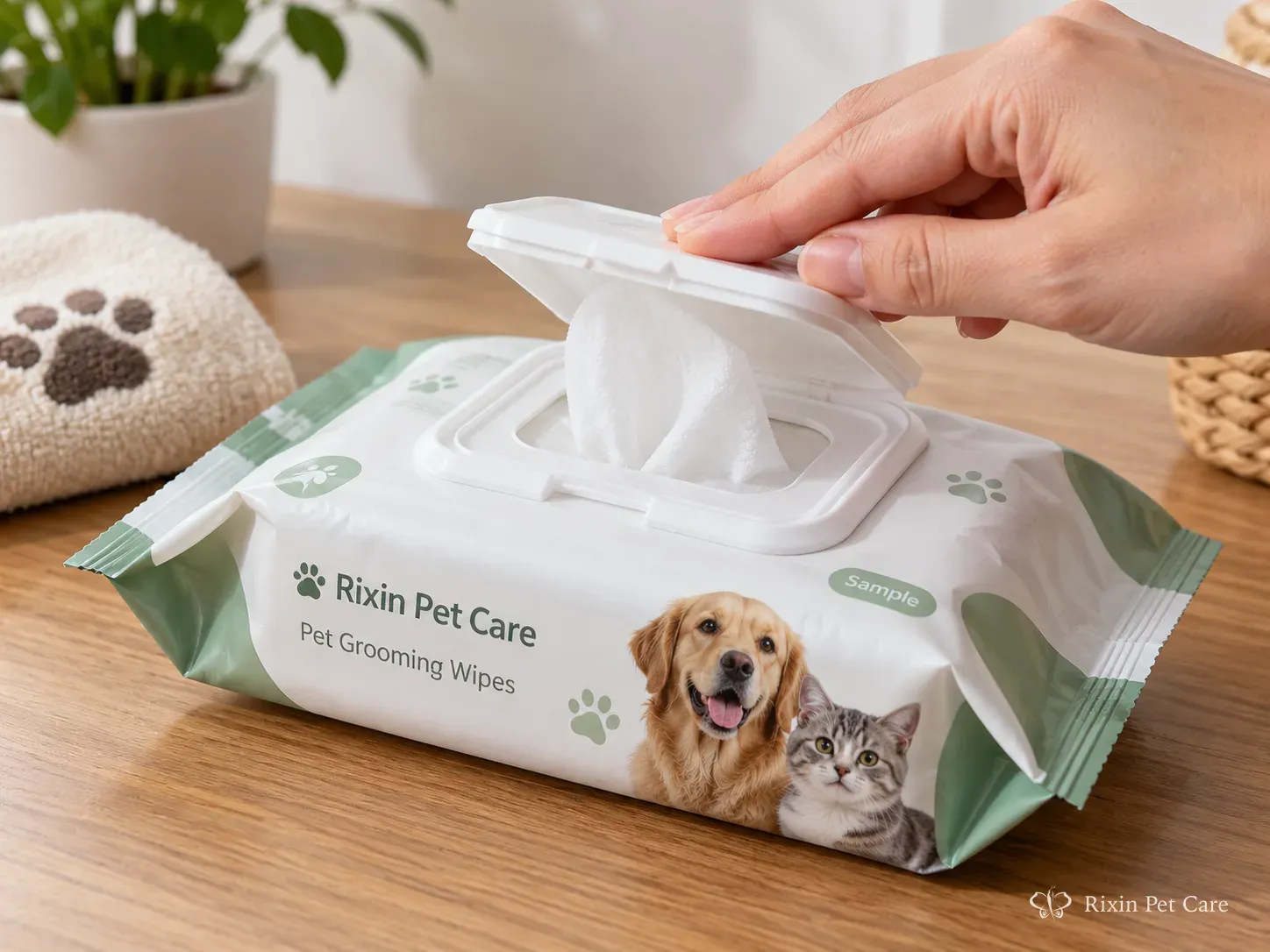
Check whether the pack makes it practical to remove a wipe and close it again. A closed pack on a desk cannot show how its lid, label seal or opening works during normal use.
When the prototype permits it, check a reasonable sequence of ordinary opening, sheet removal and closing. The relevant points depend on the selected format, whether a soft pack, travel pouch, rigid tub or another route.
Observe:
- whether the opening is easy to access without damaging the pack;
- whether the closure aligns and closes as expected after extracting a sheet;
- whether the next wipe remains accessible without repeated digging or disruption of the stack;
- whether an adhesive reseal or lid is practical in the sample’s intended use scenario;
- whether the pouch or container becomes awkward to handle as the accessible sheet arrangement changes.
Use descriptive feedback. For example:
“After normal opening and extraction in our review, the flip-top closure did not sit flush against the pack. Please review the closure and pack geometry before treating this as the approved packaging direction.”
Do not equate a few successful openings with proven moisture retention, seal integrity, leak resistance, transport durability or compatibility over shelf life. For broader pack-selection questions, see the private label pet grooming packaging guide. For the interactions among formula, substrate and pack, consult the formula–packaging compatibility guide.
7. Identify Whether the Issue Seems to Involve the Sheet, Liquid or Pack
Record whether the observed problem seems to involve the sheet, liquid or pack before asking for a revision. This helps the manufacturer investigate the relevant component. It does not mean you have diagnosed the root cause.
| What the buyer notices | Reasonable issue to investigate | Better direction to send |
|---|---|---|
| Two or more sheets come out when one is intended | Stack, fold, interleaving, opening or fill configuration | Compare the physical dispensing configuration before broadly changing the lotion |
| The saturated sheet distorts or tears in normal handling | Substrate selection, construction or liquid/material interaction | Review wet-sheet handling using the same documented configuration |
| Some checked sheets seem less moist than others | Loading/distribution, pack arrangement or handling conditions | Investigate visible variation; do not invent a liquid-loading failure percentage |
| The wipe leaves an unwanted coated feel | Liquid direction, substrate/liquid interaction or application context | Separate after-feel feedback from material softness |
| A lid does not close as intended after extraction | Closure, pack geometry or sample assembly | Review package component fit and opening/reclosure behavior |
8. Copyable Pet Grooming Wipes Sample Observation Matrix
Use this matrix to record what you saw or felt in the supplied sample. Replace the questions in the Buyer observation column with your own observations. Write “not assessed” for anything you did not evaluate. In the last column, state the follow-up you want, or “no change requested”. This is a buyer-development tool, not a factory QC specification or standardized test report.
| Review area | Context to record | Buyer observation | Direction for manufacturer |
|---|---|---|---|
| Finished configuration | Sheet, liquid, fold, count and pack represented by the sample | Which components are final-direction and which are provisional? | Confirm what configuration the next round should represent |
| First-sheet access | Pack opening and initial sheet position | Could the first sheet be found and withdrawn as intended? | Review opening or presentation if needed |
| Ongoing dispensing | Fold/stack and normal withdrawal | Were unintended multiple pulls, tearing or access problems observed? | Review dispensing configuration |
| Wet-sheet feel | Current saturated substrate and intended handling | Was the surface feel/texture appropriate for the brief? | Keep or reconsider substrate direction |
| Wet-sheet handling | Normal unfolding and planned manipulation | Any stretching, lint or tearing observed? | Investigate material/construction with supplier |
| Moisture consistency | Sheets/areas actually checked; pack condition | Any noticeably uneven wetness or visible pooling/dryness? | Review liquid loading/distribution and possible pack factors |
| Wiping experience | Appropriate, agreed evaluation context | Any noticeable residue or mismatch with expected finish? | Review formula/finished-wipe direction |
| Closure/re-opening | Proposed lid, seal or pouch; ordinary opening sequence | Did the closure work as intended when reclosed? | Review component and pack fit |
| Combined sheet + pack fit | Material, fold, count and opening together | Was handling manageable as a finished unit? | Compare complete pack configuration |
| Unresolved technical questions | Testing, documents, compatibility or scope not covered by observation | Which questions remain unanswered by this review? | Assign technical confirmation and decision owner |
Example: clear feedback without claiming a test result
“The saturated sheet has the handling feel we want, and the initial wipes we checked matched our intended moisture direction. However, the current flip-top pouch sometimes pulls two sheets at once, and a later accessible sheet felt drier. Please review the fold/dispensing configuration and investigate that moisture observation in the proposed final pack. This is not approval of shelf life, microbial quality or the final package.”
9. What a Physical Sample Review Cannot Approve
An informal physical sample review is useful for product direction. It cannot replace project-specific technical evaluation, documentation or market review.
Depending on the product and target market, matters to verify separately may include:
- Microbiological quality and preservation: suitable testing and supporting documentation, not visual assessment of the liquid or package.
- Stability and intended shelf life: review over an appropriate scope and conditions, not a single day’s appearance or scent.
- Formula, substrate and packaging compatibility: evidence for the selected system beyond ordinary opening and handling.
- Pack integrity and distribution: applicable seal, leakage and transport performance requirements.
- Repeatability and production controls: supplier specifications, actual manufacturing scope and relevant process/finished-product records.
- Animal-use suitability and market-facing claims: support for the intended species, use area, instructions and product claims; no assumption that a soft wipe or pleasant finish proves safety.
Rixin Pet Care’s testing and documentation support is a suitable place to discuss what documents or external testing may be relevant to a specific project. For claims and market-specific wording, use the label and claim review service. Neither a sample observation nor a general guidance article guarantees regulatory authorization or marketplace acceptance.
For the United States, the FDA’s guidance on animal grooming aids is one starting point for understanding the distinction between ordinary grooming and drug-type claims. It is not an approval of any particular pet-wipes formula.
10. Decide the Next Development Action, Not Just Whether You Like the Wipes
A helpful buyer conclusion might be:
“Keep the current saturated-sheet softness. Ask for a revised fold or opening direction to improve one-at-a-time dispensing. Investigate the apparent wetness difference in the current sample pack, and repeat only the relevant physical checks on the next documented configuration. Technical testing and market wording remain separate open items.”
For the broader proceed, revise, resample or hold process, keep using the generic private label sample evaluation guide. A physical wipe sample can inform a development decision without replacing formal project release requirements.
Frequently Asked Questions
Should I evaluate a dry substrate sample or a finished wet wipe?
They answer different questions. A dry swatch can help with proposed texture and material direction, but it does not show how the saturated sheet, liquid, fold and opening behave together. For a finished-product decision, review an appropriately identified wet-wipe configuration and note any provisional components.
What if the wipes pull out two at a time?
Record when and how it happens, whether one-at-a-time dispensing was part of the brief, and which pack/fold combination was reviewed. Ask the supplier to investigate the dispensing arrangement rather than assuming that the liquid formula must change.
How can a buyer assess moisture consistency without laboratory equipment?
Describe noticeable differences among the sheets and locations actually reviewed, and record sample handling limitations. These are qualitative observations—not validated measurements of loading uniformity, future moisture retention or shelf life. A technical specification or tolerance requires an agreed method and supplier evidence.
Does a successful closure review prove the pack will stay wet through its shelf life?
No. A few normal opening and reclosure observations can identify usability problems, but they do not establish barrier performance, packaging compatibility, preservation, stability or long-term moisture retention.
Can I test a new grooming wipe directly on my dog or cat?
Do not use an unapproved development formula on an animal simply to complete an informal review. Any animal-use evaluation should be appropriate for the intended species and use area, supported by the relevant product assessment and conducted responsibly. Avoid irritated skin and do not extrapolate eye/ear-area or treatment uses from ordinary grooming wipes.
Can I approve a product for production after these physical checks?
Only the specific development aspects actually reviewed can be considered acceptable at this stage. Final production decisions depend on the agreed formula and pack, supplier/manufacturing scope, required testing and documents, substantiated claims and other project requirements. The physical checklist alone is insufficient.
Final Recommendation: Give the Manufacturer a Focused Wipes Review
The strongest private label pet grooming wipes feedback describes what happened with the current sheet, liquid, fold and package, and identifies which part of the finished product needs a closer look. It does not turn a first impression into a safety, performance or shelf-life claim.
Start with Rixin Pet Care’s private label grooming wipes product direction. If your sample configuration and open questions are ready for discussion, request a project proposal to review the appropriate development next step.
Ready to Discuss Your Pet Grooming Product Project?
Share your product type, target market, packaging direction, estimated quantity, and any support you need. A rough brief is enough to start a practical next-step discussion.