How to Evaluate Private Label Pet Grooming Samples
Written by: Rixin Pet Care Editorial Team
Reviewed by: Product Development Team for manufacturing context and claim-risk alignment.
This content is provided for product planning, packaging discussion and claim-risk awareness. It is not veterinary advice, treatment guidance or market authorization.
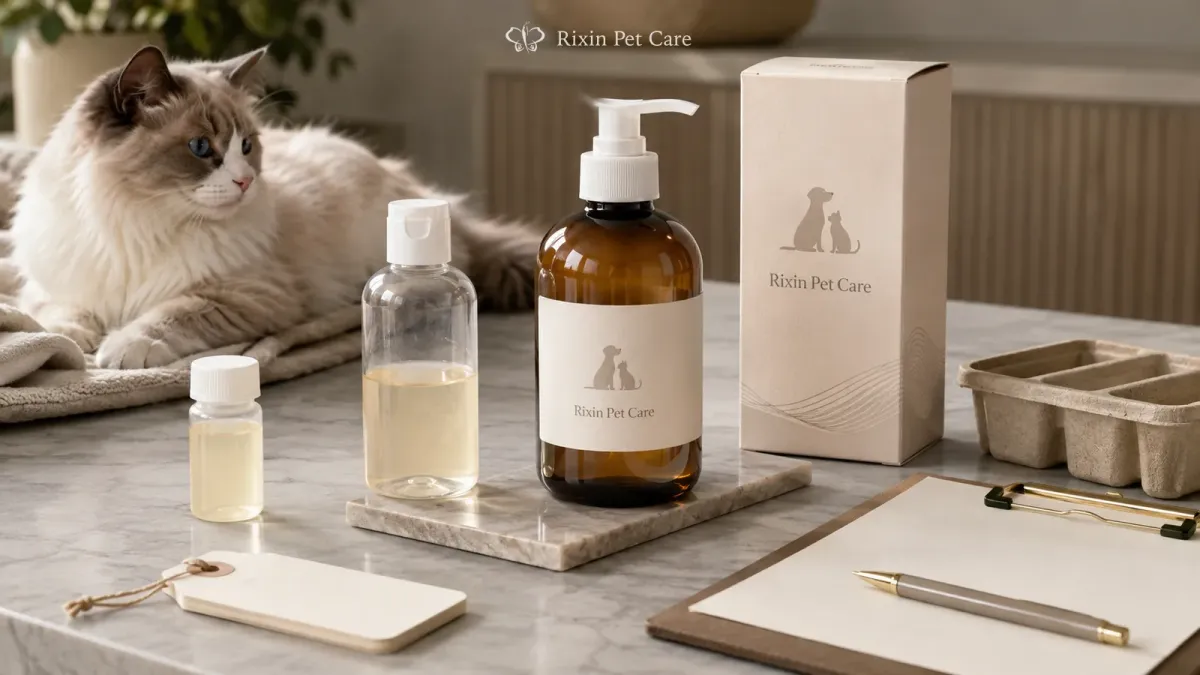
A sample may look promising, but comments such as “make it better,” “the texture feels wrong,” or “the pump does not work well” do not give a manufacturer enough information to make a clear next project decision.
Evaluate a private-label pet grooming sample by comparing the identified formula and packaging version with the agreed brief, then document the next project decision.
For private-label pet grooming buyers, each observation should connect to the sample version, agreed brief, packaging, and next step. The goal is to identify what the sample confirms and what still needs review.
See the complete private label pet grooming products guide for the wider project path.
This content is for product planning, packaging discussion, and claim-risk awareness only. It is not veterinary advice, medical guidance, or market authorization. Sample review does not by itself confirm safety, stability, formula–packaging compatibility, claim support, or bulk-production conformity.
Quick Answer
Evaluate a pet grooming sample in this order:
- Identify the sample type and version.
- Confirm what the review is intended to decide.
- Review under reasonably consistent conditions.
- Compare it with the agreed brief and previous version.
- Record appearance, odor, texture, flow, and dispensing observations.
- Review packaging function when the intended package is available.
- Separate preference from a specification difference or functional concern.
- Consolidate all reviewer feedback.
- Decide whether to proceed, revise, resample, or hold.
Different sample stages answer different questions. Approve only the version and scope you actually reviewed.
This guide begins after a sample is requested. Before sampling, confirm the product format, target market, packaging direction, and brief.
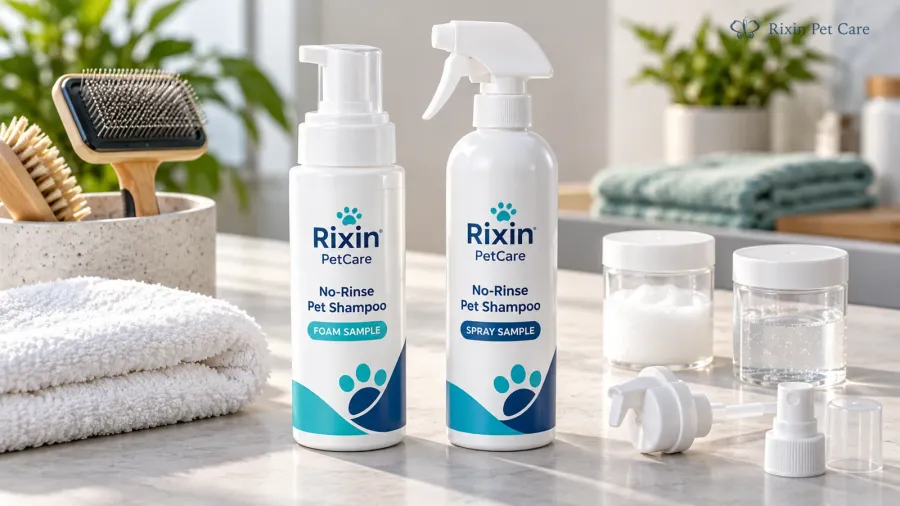
Product-specific criteria depend on the selected format. For example, how to evaluate a no-rinse pet shampoo sample covers dispensing, dry-down, residue, and finished-coat observations for that route.
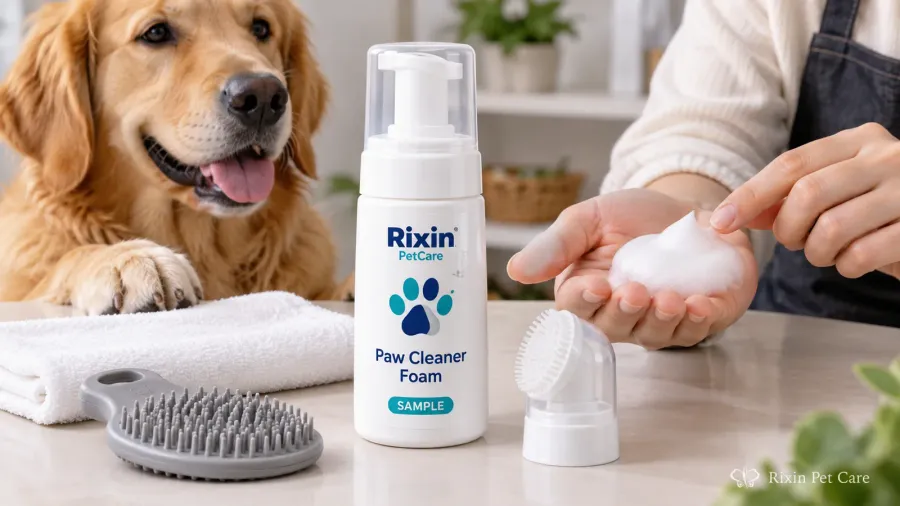
A paw cleaner foam sample may require additional review of foam delivery, localized application, wipe-off behavior, post-wipe feel, and dispenser performance. See the paw cleaner foam sample evaluation guide for that product-specific route.
Know Which Sample You Received
Before commenting on the product, identify the sample type.
Formula Sample
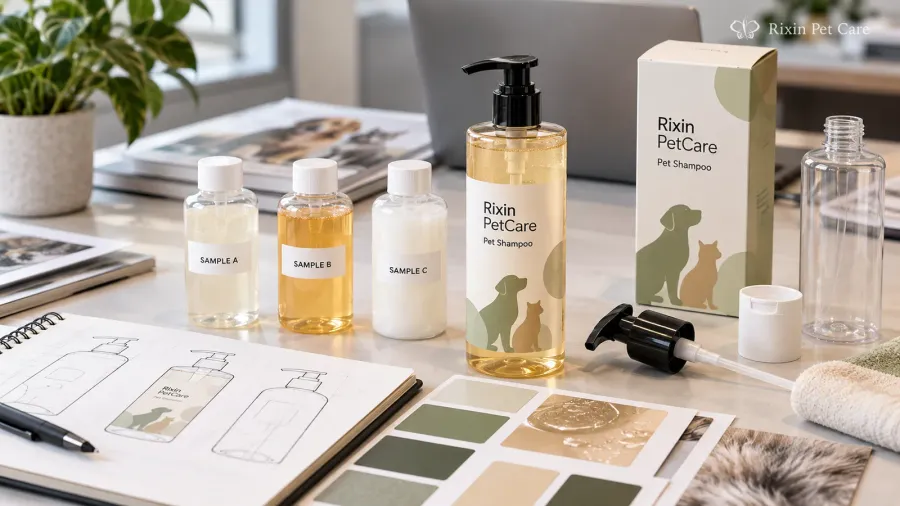
A formula sample is often supplied in a temporary jar or simple bottle. It may help you observe appearance, odor, texture, flow, and early use.
It does not confirm the final dispenser, label, carton, or shipping setup. The ready-made versus custom formula guide explains how the formula route may affect the number and purpose of sample rounds.
Packaging Sample
A packaging sample uses a selected container, closure, dispenser, pouch, or carton. It may help you review size, handling, dispensing, component fit, and presentation.
It may not contain the current formula, intended fill level, final decoration, or shipping protection.
Production-Intent Sample
A production-intent sample uses the formula and packaging version planned for bulk manufacture, or the closest documented version available.
It is closer to the planned bulk configuration than an early sample, but approval should remain limited to its stated scope. Call it a finished production sample only when project records support that description.
Confirm the Version and Review Objective
Record the sample identity before reviewing it:
- sample ID or reference;
- formula version;
- packaging version;
- date received;
- review round;
- comparison sample;
- review objective;
- requested decision.
The objective may be fragrance, texture, flow, dispensing, package handling, visual direction, or the next stage.
Compare the sample with the agreed pet grooming product brief and the previous identified version. Do not rely on memory when several people review multiple rounds.
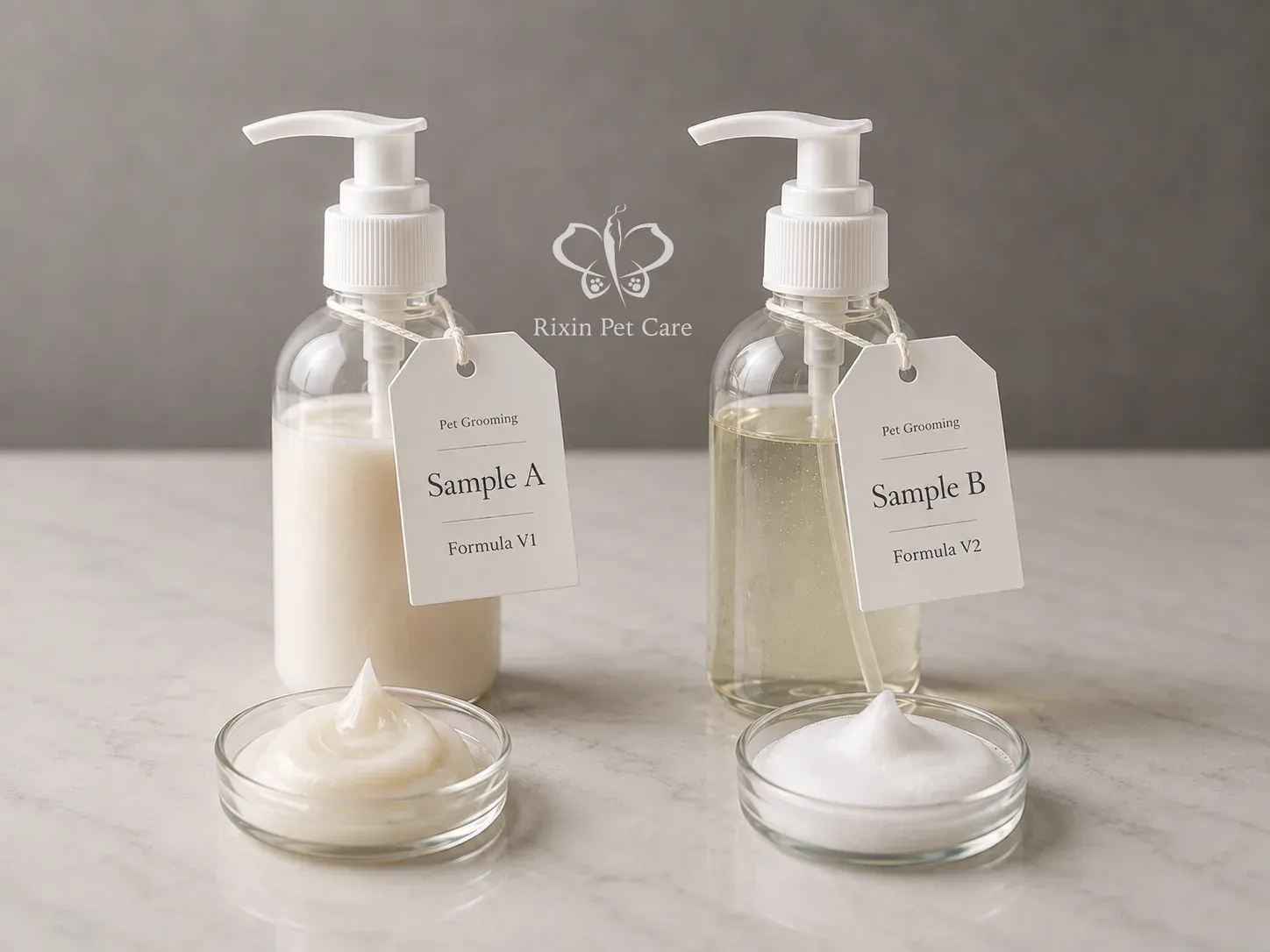
Prepare Consistent Review Conditions
Buyer review is not a laboratory protocol, but observations should be comparable.
Where reasonable:
- review samples in the same general environment;
- allow a shipped sample to return to the normal condition your team uses for comparison;
- use the same package or application method when comparing versions;
- review one identified version at a time;
- record visible observations consistently;
- consolidate feedback from different reviewers;
- separate first impressions from repeated-use observations.
Do not invent universal temperatures, waiting periods, quantities, or numbers of uses. Where live-animal or professional grooming evaluation is part of an approved project process, follow the buyer’s established procedure and appropriate professional guidance.
Check Appearance, Odor, Texture, and Flow
Start with characteristics you can describe clearly.
Appearance
Observe color, clarity or opacity, visible separation, visible particles where relevant, and consistency compared with the previous sample.
Appearance can identify a difference. It does not prove stability, safety, or conformity.
Odor
Review fragrance direction, strength, balance, and change from the agreed brief or previous version.
Use specific language. “The fragrance is stronger than version B” is more useful than “the smell is wrong.”
Texture and Flow
Observe thickness, spread, pour, pickup, residue, rinse feel where relevant, and whether the texture suits the intended dispenser.
For example:
The shampoo is difficult to dispense through the intended lotion pump and leaves more product around the nozzle than the previous version.
That observation is more actionable than “the texture is bad” because it identifies the package, comparison point, and visible result.
Review Dispensing and Package Function
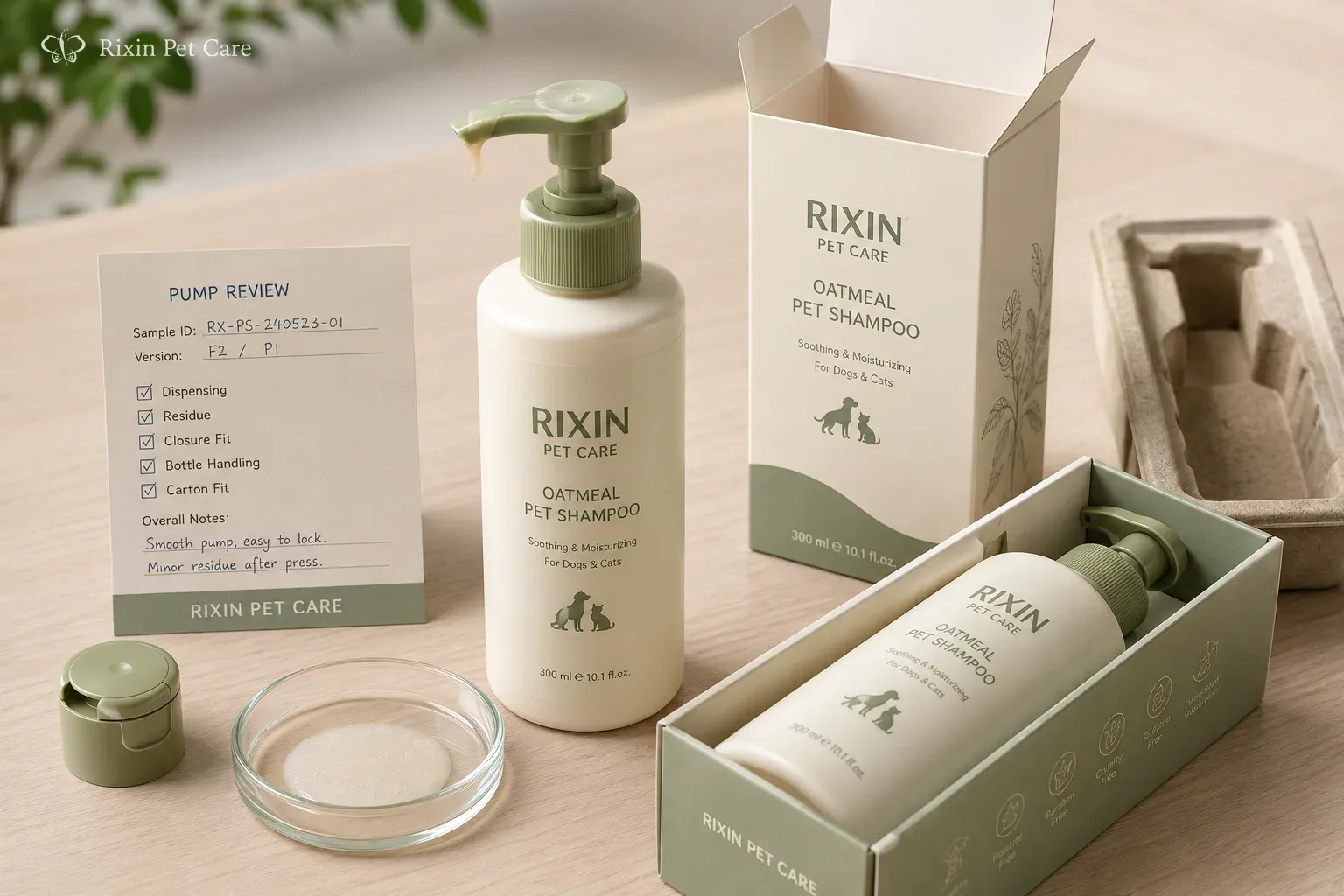
When the intended packaging is available, review the parts you can reasonably observe:
- pump, sprayer, foamer, cap, or closure operation;
- priming;
- output;
- dripping;
- residue around the actuator;
- cap opening and reclosing;
- bottle handling;
- visible leakage after shipment or ordinary handling;
- label or carton fit when included.
A visible sample observation does not replace technical compatibility or transport review. Use the formula–packaging compatibility guide for the separate question of whether the intended formula and package should be reviewed together.
Assess Use Experience Against the Product Brief
Compare the sample with the approved product position and intended use.
Depending on the project scope, practical observations may include:
- ease of application;
- spread through the intended coat or use context;
- lather or foam character;
- rinse behavior;
- residue;
- fragrance experience;
- handling with wet hands;
- professional-use practicality.
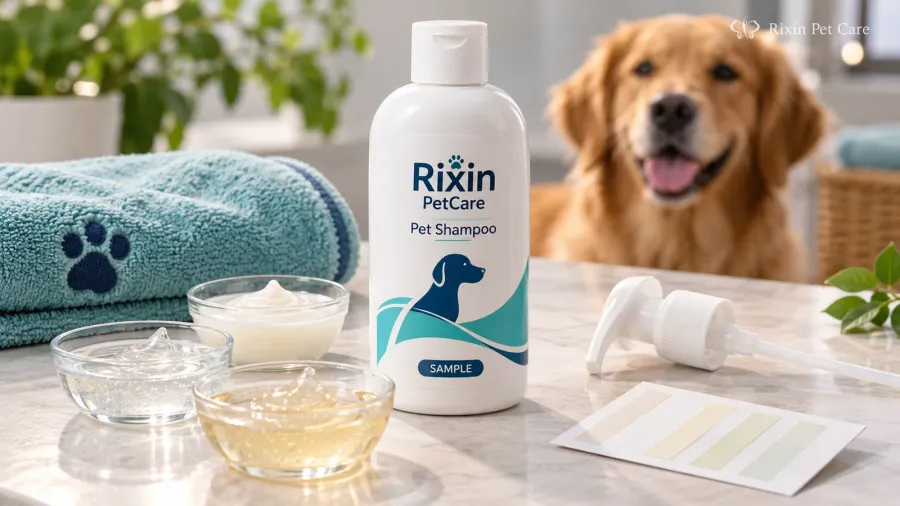
For a rinse-off shampoo project, use the private label pet shampoo sample evaluation guide for product-specific review questions.
Keep these observations within the review objective. Buyer sample review should not be used to claim safety, hypoallergenicity, irritation performance, antimicrobial performance, treatment of skin or coat conditions, veterinary suitability, or therapeutic efficacy.
Separate Preference From a Correctable Issue
Classify feedback so the manufacturer understands the required response.
Preference
A subjective direction, such as a lighter fragrance, different color, or richer feel.
Specification Difference
The sample does not match an agreed or documented requirement.
Functional Concern
The product or package does not work as intended in the observed review context, such as difficult dispensing or closure operation.
Missing Information
The buyer cannot make a fair decision because the sample identity, formula version, packaging version, or review scope is unclear.
These categories clarify whether the next response should be explanation, revision, resampling, or a decision.
Record Clear and Comparable Feedback
Use this structure:
Observation
+ review context
+ comparison point
+ desired outcome
Example:
Observation:
Product remains around the pump nozzle after dispensing.

Context:
Observed with the intended pump during the current packaging sample review.

Comparison:
More residue than the previous sample.

Desired outcome:
Review whether a cleaner shutoff or adjusted product flow is possible.
Consolidate comments before sending them. Identify required changes, preferences, concerns, and missing information. Reference the exact sample version, attach photos when they clarify a visible issue, and state the requested next step.
Avoid contradictory instructions from several reviewers. Do not prescribe a reformulation unless your team has the technical basis to do so.
Decide: Proceed, Revise, Resample, or Hold
Proceed
The sample meets the current review objective well enough to move to the stated next stage.
Proceed does not mean later technical, regulatory, packaging, or production requirements are complete.
Revise
The buyer can describe specific requested changes, and the project can enter a controlled revision round.
Resample
Another physical sample is needed before the next decision. Reasons may include a formula, fragrance, package, or dispensing change; an unclear version; or several combined changes that cannot be judged from the current sample.
Hold
Pause because information, packaging, documentation, internal agreement, or project direction is missing.
Revision and resampling can affect the pet grooming product development timeline, especially when several variables change at once.
The decision record should identify the sample version, decision scope, approved items, open items, requested next step, decision owner, and date.
Buyer Sample Evaluation Checklist
SAMPLE IDENTITY
Sample type:
Sample ID:
Formula version:
Packaging version:
Date received:
Review round:
Comparison sample:

REVIEW OBJECTIVE
What should this sample help decide?
What is outside this sample’s scope?

PRODUCT OBSERVATIONS
Appearance:
Odor:
Texture:
Flow:
Application:
Lather or foam where relevant:
Rinse or residue where relevant:

PACKAGING OBSERVATIONS
Container:
Closure:
Pump / sprayer / foamer:
Dispensing:
Dripping or residue:
Visible leakage:
Handling:
Carton or label fit where included:

FEEDBACK
Must-change items:
Preferences:
Functional concerns:
Missing information:
Photos or references:
Desired outcome:

DECISION
Proceed / Revise / Resample / Hold:
Scope of decision:
Open items:
Requested next step:
Decision owner:
Decision date:
This checklist is a development-review record, not a certificate, test report, or finished-goods approval form.
Approve Only What the Sample Can Answer
Review the identified sample against the agreed brief, record specific observations, and approve only its stated scope.
A clear decision should state what was reviewed, what remains open, who owns the decision, and the next project step.
Ready to Discuss Your Pet Grooming Product Project?
Share your product type, target market, packaging direction, estimated quantity, and any support you need. A rough brief is enough to start a practical next-step discussion.