Private Label Grooming Product Ideas for Double-Coated Dogs: A Brand Owner's Guide
Written by: Rixin Pet Care Editorial Team
Reviewed by: Product Development Team for manufacturing context and claim-risk alignment.
This content is provided for product planning, packaging discussion and claim-risk awareness. It is not veterinary advice, treatment guidance or market authorization.
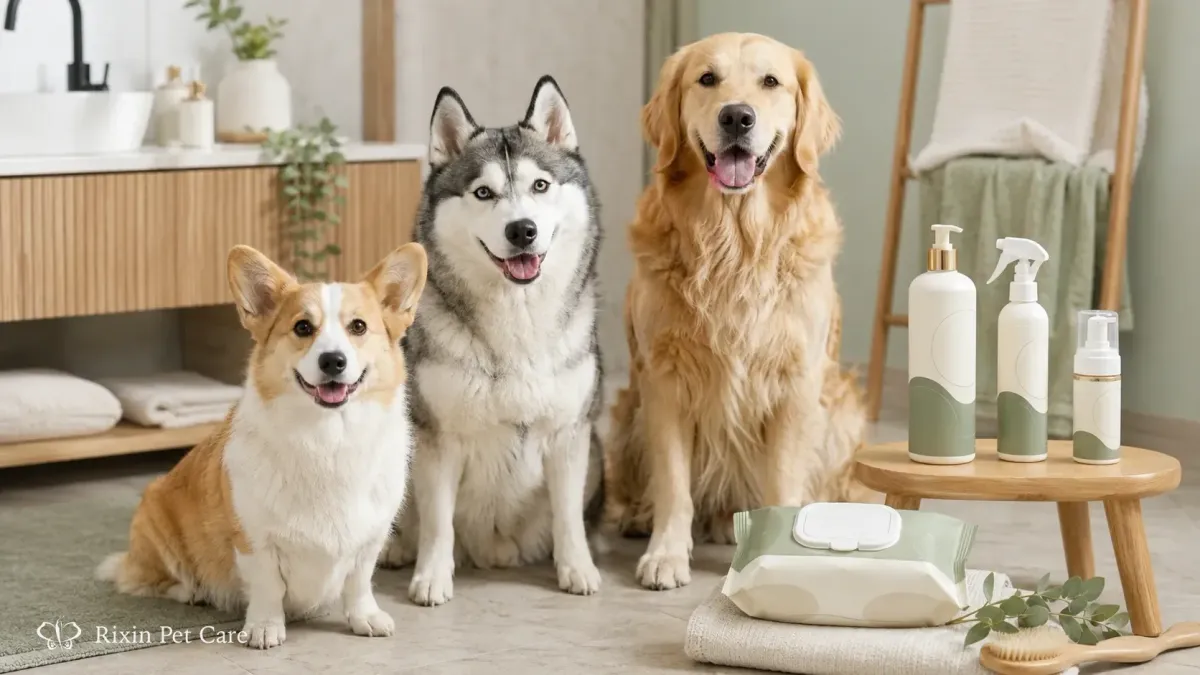
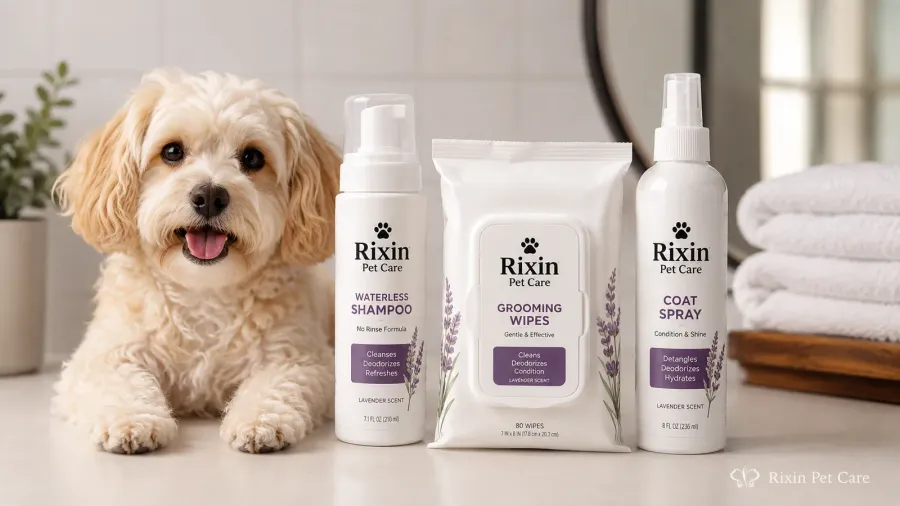
A double-coated dog product line can cover bath-time shampoo, brushing support, between-bath freshening, and paw cleanup. But a brand does not need every format at launch.
This guide helps private label buyers plan a grooming assortment for double-coated dogs: choose the main grooming occasion, identify one anchor SKU, and add only formats that solve a different task. The right mix depends on the coat, grooming routine, intended animal and use area, formula, and market. Product names and suitability claims remain proposals until reviewed.
For a breed-specific example focused on brushing, paws, and the lower coat after walks, see our corgi grooming routine guide. This page instead compares portfolio options across the wider double-coat group.
Why Double-Coated Dogs Are a Strong Private Label Opportunity
Double-coated dogs include Corgis, Huskies, Golden Retrievers, Labrador Retrievers, German Shepherds, Shelties, Samoyeds, and Shiba Inu. These coats differ in length, density, grooming needs, and owner routines. A product direction suited to one dog’s coat or application area should not automatically be described as suitable for every dog in the group.
A double coat usually has two layers: a visible outer coat and a softer undercoat. The outer coat shapes the breed’s recognizable look, while the undercoat can be dense and seasonal. That is why owners often need a repeatable grooming routine rather than an occasional wash.
The American Kennel Club’s Pembroke Welsh Corgi profile describes the breed as having a thick, weatherproof double coat and notes that combing, brushing, and seasonal bath-time routines can help manage loose hair. AKC’s guide to grooming double-coated dogs also highlights the value of using a slicker brush followed by a comb as part of regular coat maintenance.
For a brand owner, that matters because routine creates repeat purchase logic. Instead of selling one bottle, you can build a connected line with a clear reason for each SKU to exist.
What a Double-Coat Routine Lets a Brand Sell
A strong line does not start with shampoo alone. It starts with a simple routine the buyer can explain in one sentence and the end customer can follow without effort.
| Routine Moment | Product Opportunity |
|---|---|
| Bath-time cleansing | Mild dog shampoo |
| Brushing support | Coat mist or brushing spray |
| Between-bath grooming | Waterless grooming spray |
| Outdoor cleanup | Paw cleaner foam or spray |
| Quick daily cleanup | Grooming wipes |
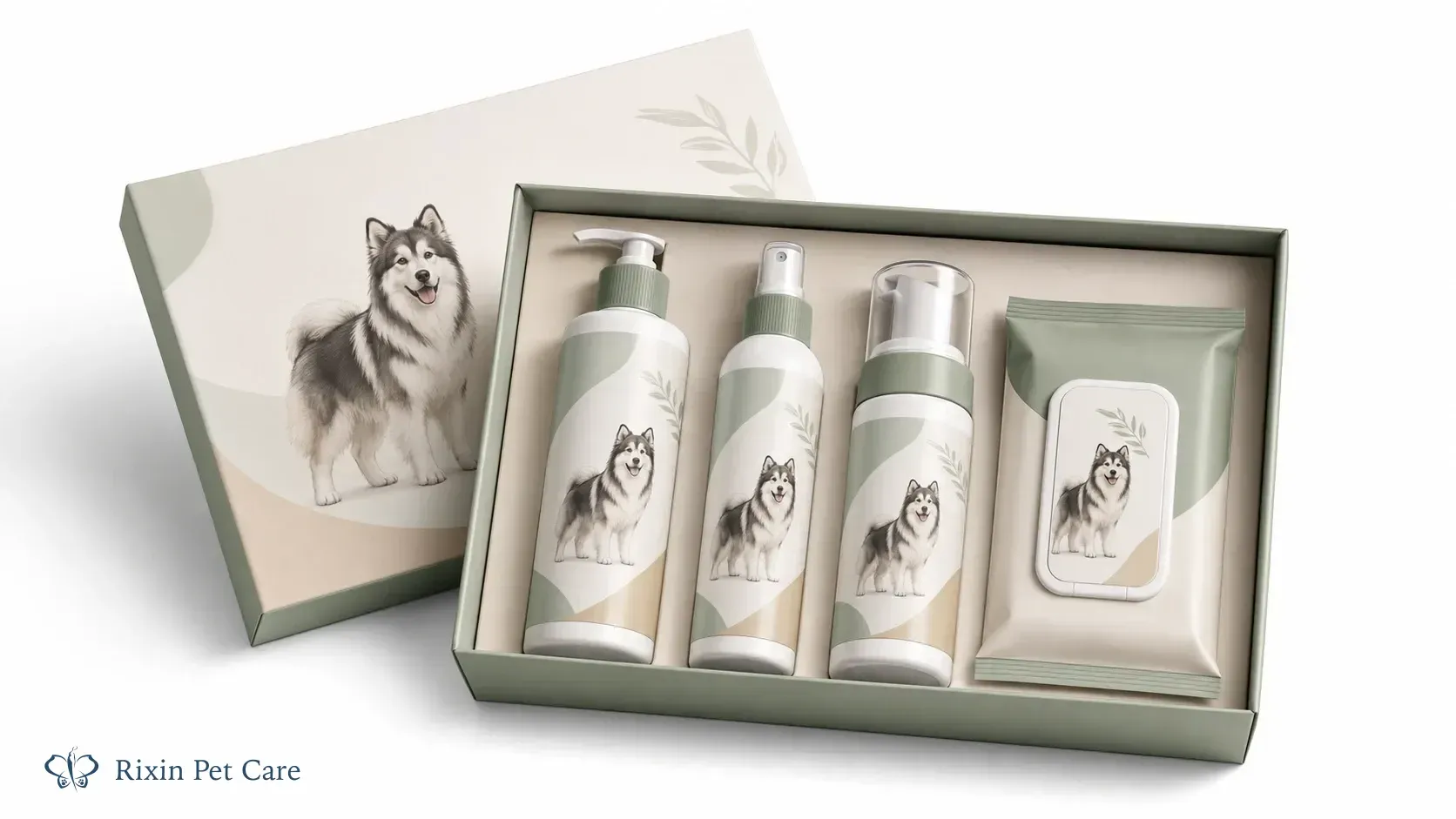
| Retail bundling | Shampoo + spray + paw cleaner + wipes |
A defined routine makes it easier to compare bundle options, price each proposed SKU, and identify which formats are genuinely needed at launch.
Start With the Core SKU: Mild Dog Shampoo
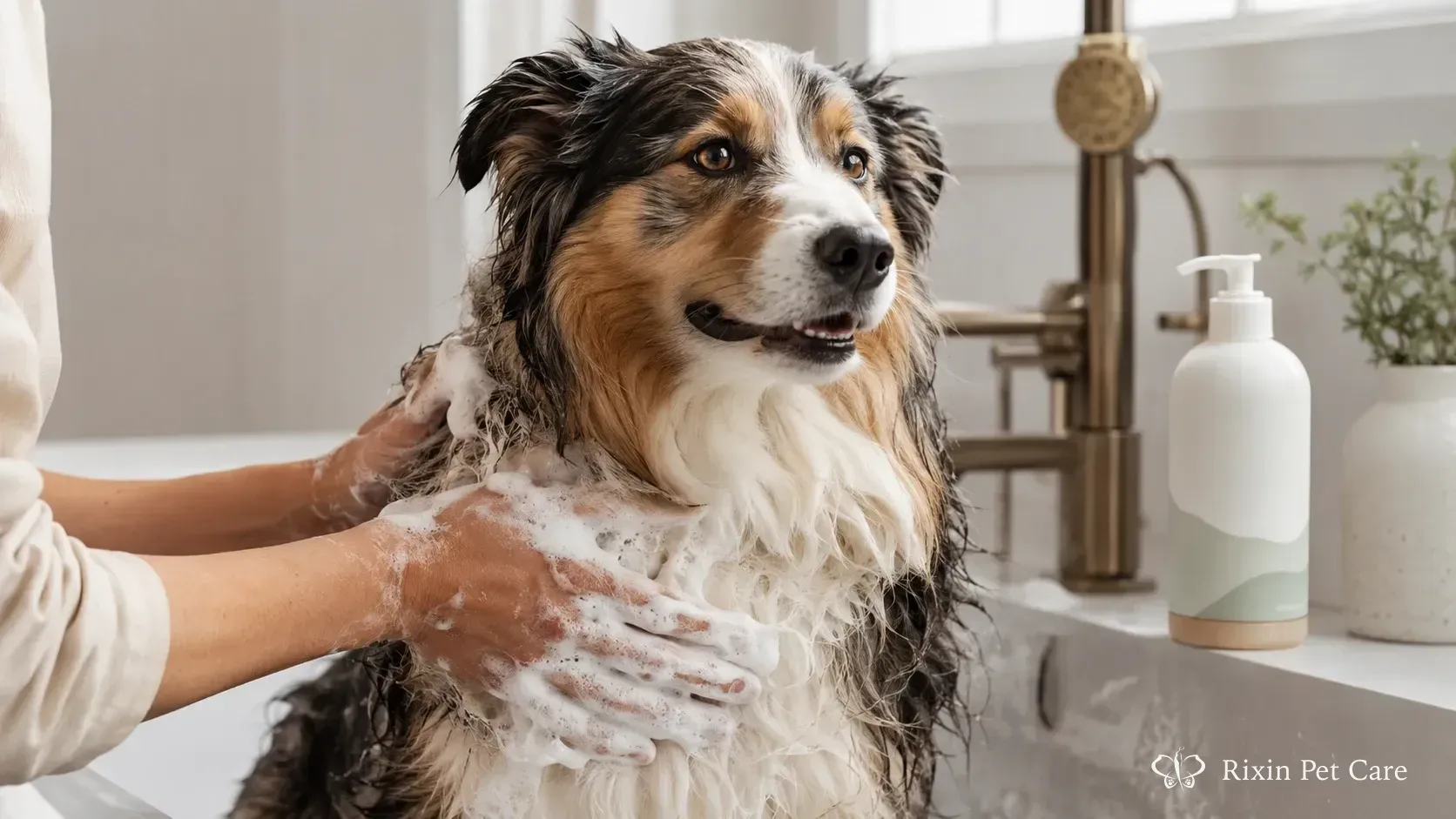
A mild rinse-off shampoo is usually the anchor product in a double-coated line. It is the easiest SKU for buyers to evaluate, and it sets expectations for coat feel, rinse experience, fragrance direction, and packaging style across the rest of the range.
For this coat type, the strongest public positioning is not aggressive deep-clean language. It is a coat-friendly, easy-rinse shampoo built for routine bath-time grooming.
A shampoo development brief can ask for:
- a rinse-off cleansing direction for the target dogs and grooming occasion;
- an easy-rinse experience and a defined after-drying coat feel;
- fragrance or fragrance-free options to evaluate;
- packaging that suits washing and dispensing;
- evidence and target-market review before using claims such as “gentle,” “suitable for sensitive skin,” or “helps remove odor.”
A product intended for routine bath-time grooming is not an instruction to shampoo every dog daily. Actual use frequency depends on the animal, coat condition, formula, and professional care advice.
The shampoo should distribute well through a dense coat and rinse cleanly. If the formula feels too heavy, bath time can feel slow. If it is too thin, it may be harder to spread through thick fur. Those details affect the buyer’s brief more than abstract marketing language does.
Brand owners can consider three practical shampoo directions:
| Shampoo Direction | Best For | Brand Positioning |
|---|---|---|
| Routine bath-time shampoo | Target double-coat use case | Rinse-off cleansing concept to validate |
| Conditioning coat shampoo | Coat-feel direction to test | Softness and manageability goals subject to evidence |
| Fragrance-free shampoo | Scent-free product brief | Fragrance-free formula option; no implied sensitive-skin approval |
AKC also advises using products intended for dogs rather than regular human shampoo because pet grooming products are formulated around canine grooming needs. For additional context, see AKC’s guide on using human shampoo on dogs.
If your brand is already narrowing a shampoo concept, OEM custom pet grooming manufacturing can help connect formula direction, packaging selection, and sampling.
Add a Brushing Support SKU to Make the Line Feel Complete
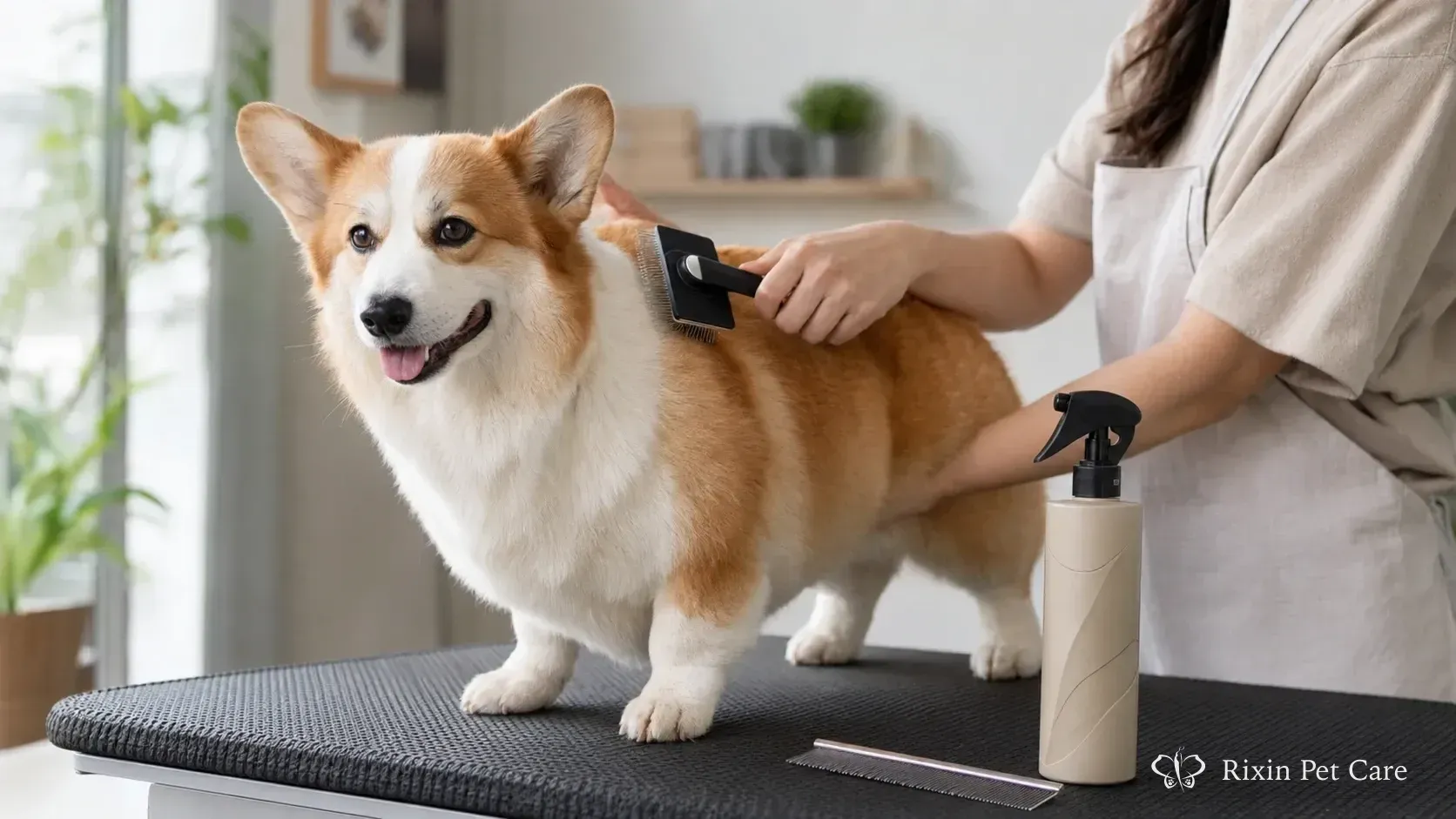
Brushing is one of the most natural product angles for double-coated dogs. The product does not need to be a tool. It can be a grooming spray that supports the brushing moment and helps the line feel more complete between baths.
A brushing support coat mist can be positioned as a leave-on grooming product used before or after brushing. It gives the buyer a simple second SKU that fits the routine without introducing risky claims.
Candidate positioning to review includes:
- coat mist for a brushing routine;
- between-bath coat freshening;
- a lightweight leave-on texture target;
- a soft-feel finish as a product-development goal.
Leave-on use, frequency, the intended coat and skin area, and wording about softness or suitability need confirmation against the actual formula, evidence, and target market. Brushing should not be framed as proof that the spray is suitable for every double-coated dog.
A brushing spray also helps improve merchandising logic. Instead of selling only shampoo, the brand can build a two-step or three-step routine:
- Wash with a mild shampoo.
- Dry the coat fully.
- Brush with a slicker brush and comb.
- Finish with a light coat mist.
AKC’s guide to choosing dog brushes explains that brush choice depends on coat type and that double-coated dogs need attention to both the undercoat and top coat. That creates a clear product bridge for brands: shampoo, brushing support, and coat finish.
Use Waterless Grooming Spray for the Between-Bath Story
Double-coated dogs are often active, outdoor-friendly, and family-oriented. Owners may not want to give a full bath after every walk, park visit, or road trip. That is where a waterless grooming spray can fit well.
A waterless grooming spray should be presented as a between-bath format, not a replacement for full bath-time grooming. That keeps the product role clear and lowers buyer confusion.
Brand positioning can focus on:
- no-rinse grooming format
- helps freshen coat between baths
- helps remove dirt and odor from daily activity
- convenient for travel and indoor routines
- lightweight coat feel
- alcohol-free formulation direction, if confirmed in the finished formula
This format is useful for brands that want a modern, lifestyle-driven range. It can be sold as a single SKU, but it often works better when paired with shampoo and wipes. For brands developing this category, pet grooming formula development can help align texture, fragrance direction, and packaging format.
Good packaging formats include:
| Format | Product Fit |
|---|---|
| Fine mist spray bottle | Coat freshening and grooming spray |
| Travel-size spray | Outdoor and travel kits |
| Refill pouch | Eco-positioned grooming lines |
| Retail bundle box | Premium dog grooming set |
Use Paw Cleaner Foam for an Easy Everyday Add-On
Many double-coated breeds are active and spend time outdoors. Corgis are low to the ground, Huskies and Shepherds are outdoor-friendly, and Retrievers are associated with family walks, parks, and weekend activity. That creates a straightforward product opportunity: after-walk paw hygiene.
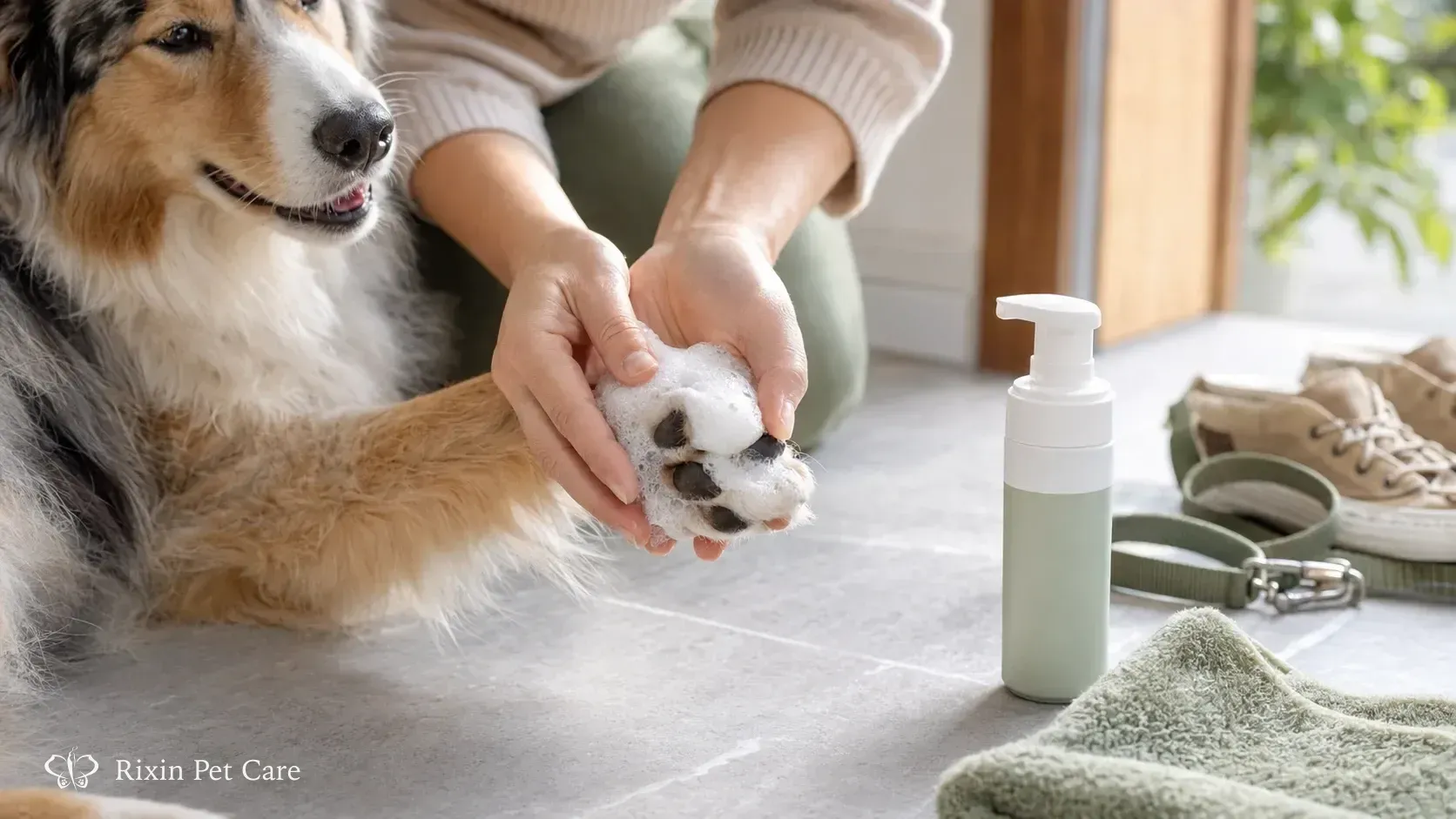
A private-label paw cleaner, such as a foam or paw cleaning spray, can be positioned as a practical daily-use product for entryway cleanup.
Candidate paw-cleaner wording includes:
- paw cleanup after outdoor activity;
- a foam or spray format for quick entryway grooming;
- dirt-removal performance as a testable target;
- fragrance-free as a formula option, if confirmed.
Do not treat “gentle,” “daily-use,” or suitability for irritated paws as automatically approved claims. Review the finished formula, leave-on or wipe-off instructions, use area, evidence, and intended market before approving wording or frequency.
For buyers, paw care is attractive because the use moment is obvious. It is easy to explain, easy to bundle, and easy to match with wipes or a waterless spray. The private label pet grooming process is often the best place to organize multi-SKU planning across foam, wipes, and supporting packaging.
Purina’s Pembroke Welsh Corgi care page mentions the importance of checking paws and ears after outdoor activity. This supports the broader idea that outdoor routines create everyday grooming moments for active dogs. See Purina’s Pembroke Welsh Corgi care guide for more context.
Add Grooming Wipes for Fast Cleanup and Better Bundle Economics
Grooming wipes can cover quick cleanup, travel, and after-walk needs, but paw, coat, skin-fold, and eye-area use are different suitability decisions. A general grooming wipe should not be assumed suitable near the eyes or for sensitive skin. Define the intended species, area, and use method, then review the formula, supporting evidence, and target-market label wording before making those claims.
For private label buyers, wipes do more than fill out a line. They create an easy entry product, support travel and outdoor positioning, and help build tiered bundles without forcing a complex formula story.
Grooming wipes are valuable because they:
- support quick daily cleanup
- fit travel and outdoor routines
- work well in grooming kits
- can be offered in fragrance-free options
- are easy to understand at retail
- support repeat purchase behavior
Safe positioning examples include:
| Wipe Type | Positioning |
|---|---|
| Daily grooming wipes | Quick cleanup for coat and paws |
| Paw wipes | Paw hygiene after outdoor activity |
| Eye-area wipes | Separate specialist development route; suitability must be reviewed |
| Fragrance-free wipes | Formula/fragrance choice, not proof of sensitive-skin suitability |
| Travel wipes | Portable grooming for active pet families |
A wipes SKU can also help a brand offer better product laddering. Shampoo can stay the core SKU, wipes can serve as the lighter-access entry product, and a grooming bundle can become the premium offer.
Use Coat Freshening Spray for a More Brandable Finish
A coat freshening spray is one of the most brandable products in a double-coated line because it can carry the line’s fragrance direction, packaging style, and lifestyle positioning.
Keep the product concept within ordinary grooming and coat care. Candidate directions include a coat freshening spray, a lightweight mist, and a defined after-use scent or coat-feel target. Odor-removal and softness claims need finished-product evidence; “alcohol-free” needs formula confirmation. Leave-on suitability and use frequency require project-specific review rather than an assumption based on coat type.
Brand owners can create different variants:
| Variant | Brand Direction |
|---|---|
| Fresh linen style | Clean home and indoor pet routine |
| Soft botanical style | Premium natural-inspired line |
| Fragrance-free style | No added-fragrance concept to verify |
| Puppy-family style | Age-specific concept requiring separate suitability review |
| Outdoor dog style | After-walk grooming routine |
Build the Line Around One Clear Routine, Not Random SKUs
Use the earlier routine table to choose formats; do not launch all six options by default.
- Start: Choose one rinse-off shampoo or another clearly defined anchor product.
- Expand: Add one format that serves a different occasion, such as brushing support or after-walk paw cleanup.
- Bundle: Consider a kit only when each included SKU has a distinct role and approved instructions.
A general double-coat range can target a documented grooming occasion rather than claiming universal suitability across breeds. The corgi-focused guide covers a narrower, after-walk and lower-coat brief.
Packaging Should Make the Routine Feel Easy to Buy
Packaging can help turn a technical product line into a clear consumer routine. A double-coated dog grooming line should look organized, easy to use, and premium enough for retail or DTC sales.
Useful packaging formats include:
| Product | Packaging Options |
|---|---|
| Shampoo | Squeeze bottle, pump bottle, flat-shoulder bottle |
| Coat mist | Fine mist spray bottle |
| Waterless spray | Trigger or fine mist spray bottle |
| Paw cleaner | Foam pump bottle |
| Wipes | Soft pouch, flip-top pouch, canister |
| Grooming kit | Gift box, mailer box, retail display box |
For visual branding, pet brands can consider:
- coat-type icons
- breed-inspired illustration
- soft neutral packaging colors
- simple routine numbering
- travel-size companion products
- matching shampoo, spray, and wipes labels
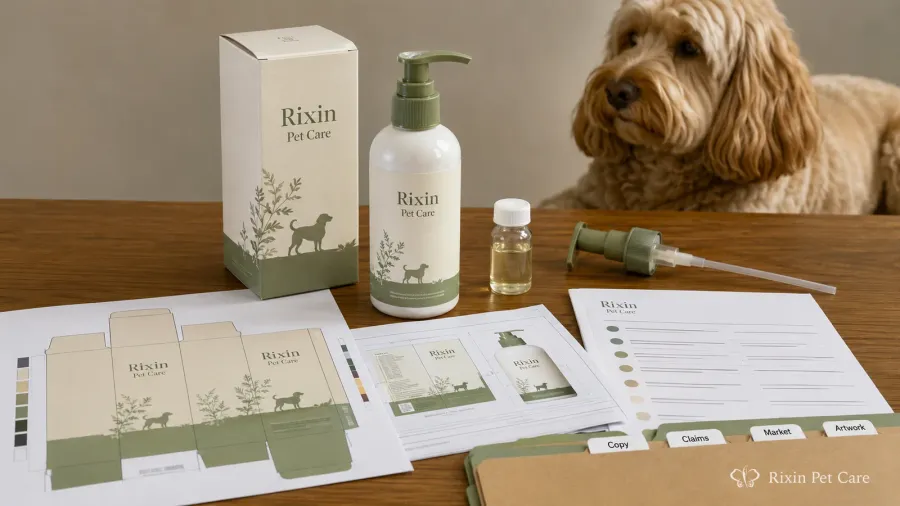
For packaging direction that needs to connect product role and presentation, pet grooming label and packaging design can help align the range before production.
What Buyers Should Prepare Before Requesting a Proposal
You do not need a completed technical specification before requesting an initial manufacturing discussion. Start with the product roles and the information already available.
For a smoother proposal discussion, it helps to prepare:
- target market and sales channel
- preferred product formats
- fragrance-free or fragrance direction preference
- packaging style or bottle reference
- rough launch timing
- estimated order quantity, if available
- any required documentation or claim-review needs
- an existing reference product, if available
This is enough to start a practical discussion on SKU mix, sample path, packaging options, and documentation scope. If some details are still open, the proposal conversation can still move forward.
How RixinPetCare Can Support Double-Coat Grooming Brands
RixinPetCare supports private label pet grooming brands with OEM/ODM formula and packaging customization for rinse-off, leave-on, and waterless format options.
For a double-coated dog grooming line, RixinPetCare can help with:
- product concept development
- formula direction
- sample preparation
- shampoo, spray, foam, and wipes formats
- packaging selection
- label wording review
- documentation support
- market-specific claim review support
Whether your brand wants to launch a single dog shampoo or a complete double-coat grooming kit, the best starting point is a clear project brief: target dog type, target market, preferred format, fragrance direction, packaging style, and desired retail positioning.
Request a Double-Coat Grooming Product Line Proposal
FAQ
What grooming products are useful for double-coated dogs?
Useful products include mild dog shampoo, brushing support coat mist, waterless grooming spray, paw cleaner foam, grooming wipes, and coat freshening spray. For brand owners, these products work best as a routine-based line rather than isolated SKUs.
Can pet brands create a grooming line for double-coated breeds?
Yes. A double-coated dog grooming line can be built around bath-time cleansing, brushing support, between-bath freshness, paw hygiene, and quick cleanup. The product line can be positioned by coat type, lifestyle, or breed group.
Is waterless grooming spray useful for double-coated dog routines?
A waterless grooming spray can fit well as a between-bath grooming format. It is especially useful for quick coat freshening after daily activity, travel, or indoor routines.
What should be included in a private label grooming bundle?
A practical bundle can include shampoo, coat spray, paw cleaner, and grooming wipes. A premium bundle may also include travel sizes or a routine card that explains when to use each product.
What documents should pet grooming brands request from a manufacturer?
Brands may request SDS, COA, product specification, stability support, microbial support, preservative challenge support, packaging compatibility support, and market-specific claim review support depending on product format and target market.
Conclusion
A double-coat grooming range works best when the buyer selects an anchor SKU and adds only useful, distinct formats. Before approving claims about sensitive skin, daily use, leave-on care, or eye-area suitability, review the actual formulas and evidence. To scope a range, request a proposal with the target dogs, use areas, formats, packaging, and market.
Ready to Discuss Your Pet Grooming Product Project?
Share your product type, target market, packaging direction, estimated quantity, and any support you need. A rough brief is enough to start a practical next-step discussion.